Apple TV vs Google TV: Which is Right for You in 2026?
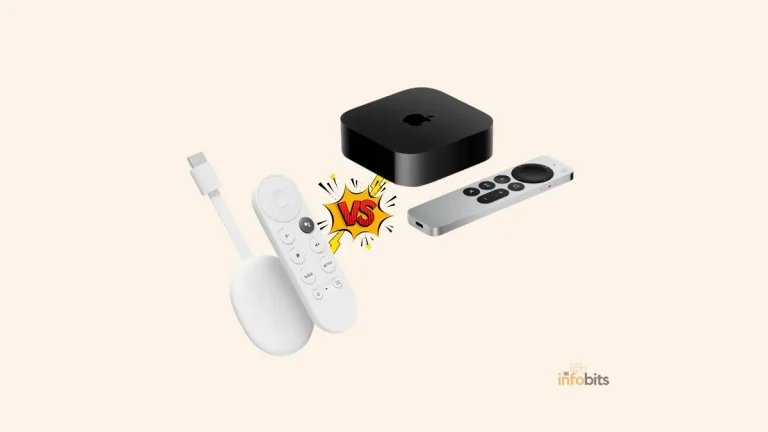
“Apple TV vs Google TV” sounds like a simple two-way comparison, but it’s actually comparing two different kinds of things.
Apple TV is a single device with one consistent software experience. Google TV is a platform that runs on dozens of different products: Google’s own Google TV Streamer, TVs from Sony, TCL, and Hisense, and budget streamers from Walmart’s Onn brand.
This means “Google TV” can mean a noticeably different experience depending on exactly what you bought.
That distinction matters more in 2026 than it used to, for two reasons: Apple just raised its hardware price significantly, and Google is in the middle of rolling artificial intelligence deeply into the platform through Gemini, unevenly, depending on your specific device.
This guide walks through both platforms as they actually stand today, not as they stood when Chromecast was still Google’s flagship streaming gadget.
Quick Answer:
- Choose Apple TV if: you’re already using an iPhone, iPad, or Mac daily, you want a single, consistently updated experience regardless of which Apple TV model you own, and you value curated software over raw AI features.
- Choose Google TV if: you’re an Android user, you want the widest possible hardware and price range (from budget Onn streamers to premium TVs), or you’re specifically interested in Gemini’s new AI features, as long as you check that your exact device supports them.
- Neither one is now the cheapest option. Google no longer sells a sub-$50 first-party device, and Apple TV recently jumped to $199. If price is your priority, look at Roku or a Fire TV Stick alongside these two.
What Is Apple TV, Exactly?
Apple TV refers to both the hardware (a small set-top box) and the software (tvOS) that runs on it. The current model is the Apple TV 4K (3rd generation), launched in October 2022 with an A15 Bionic chip, support for HDR10+ and Dolby Vision, and a USB-C Siri Remote.
It’s a genuinely standalone device. No phone or account required to stream. But it integrates deeply with the rest of Apple’s ecosystem: AirPlay for casting from an iPhone or Mac, Handoff for picking up where you left off, and shared purchases and libraries through Family Sharing.
Because Apple controls both the hardware and software end-to-end, every Apple TV 4K owner gets the same tvOS version at the same time, with no manufacturer-dependent fragmentation. The tradeoff is choice: there’s exactly one current Apple TV model, at one starting price.
Note on pricing: Apple raised the Apple TV 4K’s price from $129 to $199 in June 2026. A substantial jump that changes the value calculation compared to previous years, especially against Google’s cheaper hardware options.
What Is Google TV, Exactly?
Google TV is the interface and software layer Google licenses out to television manufacturers and builds into its own streaming hardware.
It replaced the “Android TV” branding as the more consumer-facing name, though the underlying Android TV OS is still what’s running under the hood. You’ll find Google TV on:
- Google’s own hardware: the Google TV Streamer (4K) [view on Amazon], Google’s current first-party device at $99.99, which also serves as a Thread/Matter smart home hub.
- Third-party smart TVs: Sony, TCL, Hisense, and others build Google TV directly into their sets.
- Budget streaming devices: Walmart’s Onn brand sells Google TV-based streamers [view on Amazon], often the most affordable route into the platform.
This breadth is Google TV’s biggest strength and its biggest inconsistency. Performance, update speed, and even which AI features you get can vary significantly between a flagship Sony TV and a budget Onn stick, even though both technically “run Google TV.”
Related: Future-Proofing Your TV: WebOS vs Google TV Comparison Guide
The Big 2026 Wildcard: Gemini vs Siri
This is genuinely new territory that older comparisons of these platforms don’t cover, and it’s arguably the most important software difference right now.
In September 2025, Google began replacing the long-standing Google Assistant on Google TV with Gemini, its more advanced AI system.
In early and mid-2026, Google added several new Gemini features to improve the user experience. Search results are now more visual, combining text, images, and videos in a single response.
Google also introduced Deep Dives. These are interactive, narrated explainers that make complex topics easier to understand.
Sports fans can now view live scores and quick game updates directly on their screens. Another helpful upgrade is voice-controlled settings. You can simply say something like, “The dialogue is too quiet,” and Google TV will adjust the audio without making you search through the settings menu.
The catch: these features have rolled out unevenly. They debuted first on select TCL TVs and the Google TV Streamer, require Android TV OS 14 or higher, and some of the more advanced generative tools (AI image and video creation via Nano Banana and Veo) need a paid Google AI Pro subscription.
If you buy a budget Google TV device today, there’s a real chance it won’t get these features for months, if at all.
Apple’s approach has been slower and narrower by comparison. tvOS hasn’t received a Siri overhaul on the same scale.
Apple has reportedly delayed its next Apple TV hardware refresh specifically to align with a more personalized version of Siri, suggesting the bigger AI push on Apple’s side is still to come rather than already rolled out.
Decision point: if cutting-edge AI features are a priority for you right now, Google TV has the more advanced offering today, but only on specific, newer, or premium hardware. Check the exact model’s OS version before assuming you’ll get it.
Related: Apple TV vs Roku: A Comprehensive Comparison
Performance and Hardware
Apple TV’s performance story is simple because there’s only one current model: the A15 Bionic handles 4K HDR playback and app navigation smoothly, and every unit performs identically since Apple controls the hardware.
Google TV’s performance varies by definition, since it runs across wildly different hardware tiers. The Google TV Streamer itself performs well, with a faster processor and more memory than the discontinued Chromecast it replaced.
However, not every Google TV device delivers the same experience. Budget streaming devices from Onn and entry-level Google TV models from other brands often have slower performance. Apps may take longer to load, and navigation can feel less responsive.
This is one of the tradeoffs of the Google TV ecosystem. It offers devices at a wide range of prices, but overall performance can vary significantly depending on the hardware you choose.
Common mistake to avoid: don’t assume “Google TV” guarantees the same speed or feature set across every product carrying that name. Always check the specific device’s processor, RAM, and current OS version rather than assuming based on the platform name alone.
Features and Ecosystem Integration
Apple TV’s standout features include deep HomeKit integration for smart home control, Thread networking support, Apple Arcade for controller-compatible gaming, Fitness+ workout content, and AirPlay for effortless casting from any Apple device. Family Sharing lets up to six people share purchases and subscriptions.
Google TV offers several features that make streaming easier and more personalized. On supported devices, Gemini helps you find movies and shows with smarter search results and better recommendations.
Google TV also integrates seamlessly with YouTube and YouTube TV. This lets you watch live TV without needing additional streaming hardware.
Each family member can create a separate profile. That means everyone gets personalized recommendations based on their own viewing habits.
If you choose the Google TV Streamer, you also get a built-in Thread and Matter smart home hub. It makes it easy to connect and manage compatible smart home devices from one place.
Myth vs. fact: It’s a common assumption that Google TV is inherently more “open” because of Android’s reputation. In practice, most Google TV devices are curated similarly to Apple TV for everyday use, though Google TV does allow sideloading apps outside the Play Store on supported devices, something Apple TV doesn’t permit natively.
Related: Tizen vs Google TV: Which Platform Takes the Lead?
Content and Applications
Both platforms cover the essentials: Netflix, Disney+, Prime Video, Max, and YouTube all run natively on each. The differences show up at the edges:
- Apple TV offers Apple TV+ originals, iTunes movie purchases and rentals (note: the standalone iTunes app was retired years ago, with purchases folded into the unified Apple TV app), and Apple TV Channels, which lets you subscribe to services like Paramount+ or MGM+ directly through Apple’s billing.
- Google TV offers the broadest overall app catalog of any major smart TV platform, since it draws from the Android TV app ecosystem, plus a “for you” recommendation feed that pulls from your connected subscriptions and, increasingly, Gemini’s own visual search results.
Both Apple TV and Google TV support all the major streaming apps, so you won’t miss out on your favorite services. The biggest difference is how they help you discover content.
Apple TV focuses on a clean, curated experience with a simple interface. Google TV takes a broader approach by using AI-powered recommendations to help you find new movies and shows based on your interests.
Cost and Value in 2026
This is the section that’s changed the most since the last time this comparison was worth revisiting. Both companies’ pricing has shifted:
| Apple TV 4K | Google TV Streamer | Budget Google TV (Onn, etc.) | |
|---|---|---|---|
| Starting price | $199 (as of June 2026) | $99.99 | $20–$50 (varies) |
| Smart home hub | Works with Matter/HomeKit | Built-in Thread border router | Rarely included |
| Consistency | Identical experience on every unit | Strong on Google’s own hardware | Varies significantly |
| AI features | Siri (major upgrade pending) | Gemini, rolling out in stages | Limited or delayed |
Apple TV’s price increase makes it a harder sell purely on cost, even accounting for Apple’s typical hardware longevity and consistent update support.
Google TV’s range is wider, but the “Google TV” name alone doesn’t tell you what you’re getting. A $25 Onn stick and Google’s own $99.99 Streamer are both “Google TV,” with a real gap in performance and features between them.
Tip: If your household is genuinely price-sensitive and you don’t have a strong ecosystem preference, a mid-range Google TV device or a Fire TV Stick 4K Plus [view on Amazon]will usually deliver more value than either flagship option here. A Roku Streaming Stick 4K [view on Amazon] is another solid budget-friendly pick worth cross-shopping before committing to either premium ecosystem.
Related: Chromecast vs Apple TV: The Battle of the Streaming Devices
User Experience
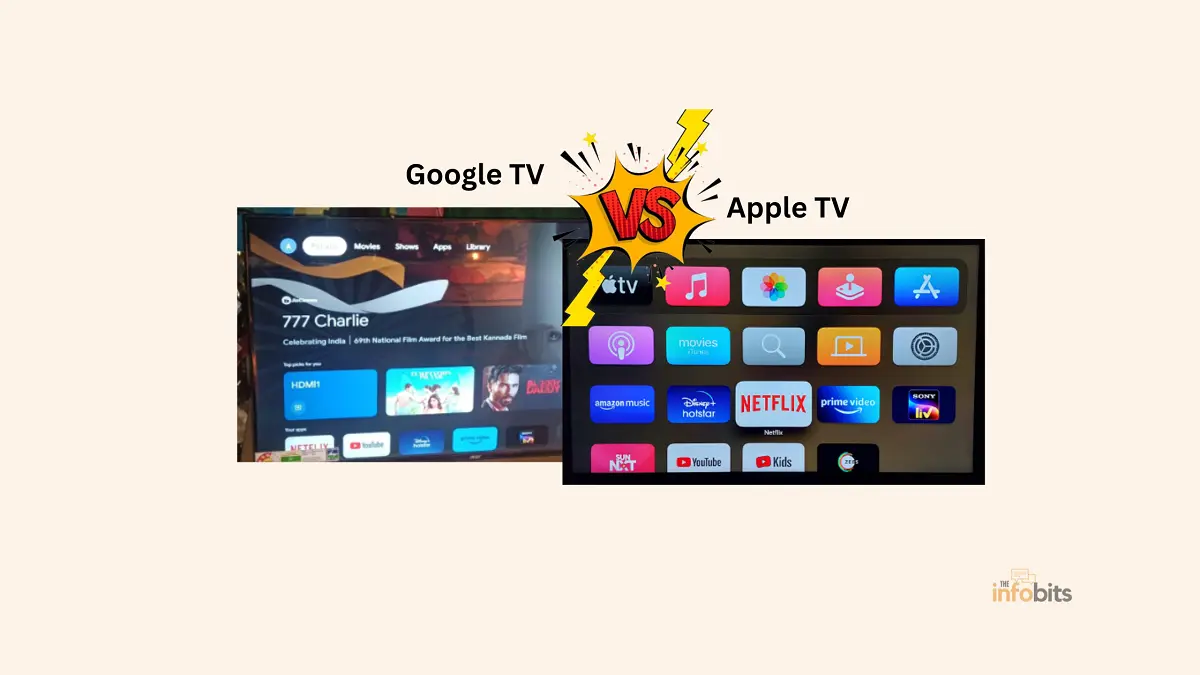
Apple TV’s interface is visually consistent and calm by design. tvOS 26 added a “Liquid Glass” visual refresh, cinematic poster art, and simpler profile switching.
But the core navigation philosophy (a grid of apps, a unified TV app for content discovery) hasn’t fundamentally changed in years. That consistency is a genuine strength for people who dislike relearning an interface.
Google TV’s experience is shifting toward being more conversational and AI-driven, particularly on devices that have received the Gemini update.
Instead of just returning search results, Gemini can generate a visual, narrated response to a question, adjust settings by voice, or surface a “Deep Dive” explainer.
It’s a more dynamic approach, but it also means the on-screen experience can look and behave differently between two Google TV devices bought at different times.
Tip: If you’re the type of household member who gets frustrated when an interface changes unexpectedly, Apple TV’s slower, more deliberate update cycle may suit you better than Google TV’s faster-moving, AI-driven rollout.
Comparison at a Glance
| Category | Apple TV | Google TV |
|---|---|---|
| Price (2026) | $199 (single current model) | $99.99 (Streamer) to ~$20-50 (budget devices) |
| Hardware consistency | Identical across all units | Varies significantly by manufacturer and tier |
| AI assistant | Siri (major overhaul pending) | Gemini (actively rolling out, uneven by device) |
| Casting | AirPlay (Apple ecosystem) | Google Cast (cross-platform) |
| Smart home | HomeKit, Thread support | Matter/Thread hub built into Streamer model |
| App catalog | Curated, smaller | Broadest of any major platform |
| Sideloading apps | Not supported | Supported on many devices |
| Update consistency | Same version, same day, every device | Staggered by manufacturer and model |
| Best for | Apple ecosystem households want consistency | Android households want AI features and hardware choice |
Related: How to Quickly Fix an Apple TV Light Blinking Problem
Decision Guide
- You use iPhone, iPad, or Mac daily → Apple TV integrates seamlessly with your existing devices and gets identical software regardless of when you bought it.
- You use Android and want the newest AI features → Google TV’s Gemini integration is currently ahead of Apple’s Siri, but confirm your specific device or model supports it before buying.
- You want the widest range of price points → Google TV’s ecosystem spans from budget Onn streamers to premium Sony and TCL TVs; Apple TV has exactly one price tier.
- You want guaranteed consistency regardless of hardware generation → Apple’s single-device approach avoids the fragmentation that can affect Google TV across different manufacturers.
- You care about smart home hub features → The Google TV Streamer specifically includes a built-in Thread border router; Apple TV works with HomeKit but isn’t positioned as a dedicated hub in the same way.
Final Thoughts
The honest way to frame this decision in 2026 is less “which platform is better” and more “which kind of buyer are you?”
Apple TV offers one product, one price, and a guarantee that every owner gets the same experience, now at a noticeably higher cost than before.
Google TV offers a much wider range of hardware and price points, plus the more aggressive AI rollout through Gemini, but with real inconsistency depending on exactly which device you buy.
If you’re deep in Apple’s ecosystem, the price increase probably won’t change your decision. If you’re Android-based or ecosystem-neutral, Google TV’s flexibility and its head start on AI features make a stronger case than it did a couple of years ago.
Either way, check the specific device and its current software version before buying, since “Apple TV” is one thing, but “Google TV” can mean several different experiences depending on what’s actually inside the box.
Related: WebOS vs Tizen: Which One Is Right for Your TV?
Frequently Asked Questions
Is Google TV the same as Android TV?
They’re closely related. Google TV is the newer interface and branding layered on top of the underlying Android TV OS. Some manufacturers still use “Android TV” branding for more basic implementations, while “Google TV” typically includes the fuller interface with personalized recommendations.
Why did Apple TV get more expensive?
Apple raised the Apple TV 4K’s price from $129 to $199 in June 2026. Apple hasn’t detailed a specific reason publicly, and the change came ahead of an expected hardware refresh tied to an upgraded version of Siri.
What is Gemini on Google TV?
Gemini is Google’s AI assistant, which began replacing Google Assistant on Google TV starting in September 2025. It powers features like visually rich search answers, narrated “Deep Dive” explainers, sports briefs, and voice-controlled picture and sound settings.
Does every Google TV device get Gemini features?
No. Gemini features require Android TV OS 14 or higher and have rolled out first to select TCL TVs and the Google TV Streamer, with broader device support arriving in stages throughout 2026. Older or budget devices may not receive them for some time, if at all.
Which platform has more apps?
Google TV generally offers a broader app catalog, since it draws from the wider Android TV app ecosystem. Apple TV’s App Store is smaller but tightly curated, with strong support for premium content and controller-based games.
Can I sideload apps on Apple TV?
No, not in the way Android allows. Apple TV is limited to apps distributed through its official App Store. Many Google TV devices do support sideloading apps from outside the Play Store.
Is Google TV cheaper than Apple TV?
It depends on which Google TV device you’re comparing. Google’s own Google TV Streamer costs $99.99, about half of Apple TV’s current $199 price. Budget Google TV devices, like Walmart’s Onn streamers, can cost significantly less than either.
Does Apple TV support 4K and Dolby Vision?
Yes. The current Apple TV 4K supports 4K HDR playback with both Dolby Vision and HDR10+, along with Dolby Atmos audio.
What’s the difference between Apple TV and Apple TV+?
Apple TV is the hardware device and its software (tvOS). Apple TV+ is Apple’s subscription video streaming service with original shows and movies, accessible on Apple TV hardware as well as through the Apple TV app on other platforms, including some Google TV devices.
Can I use AirPlay with a Google TV device?
Not directly through Google’s own casting system, since AirPlay is Apple’s proprietary protocol. Some Google TV devices and TVs support AirPlay separately as an added feature, but it isn’t a native part of Google TV the way Google Cast is.
Is there a new Apple TV coming soon?
A new Apple TV model has reportedly been ready for release for some time, according to supply chain reporting, but its launch is said to be tied to the rollout of a more personalized version of Siri rather than a confirmed date.
Does Google TV support multiple user profiles?
Yes, Google TV supports multiple accounts with individualized recommendations and watchlists per profile, similar to Apple TV’s profile system introduced more fully in tvOS 26.
Which is better for smart home control, Apple TV or Google TV?
It depends on the specific device. The Google TV Streamer includes a built-in Thread border router, giving it a direct smart home hub role. Apple TV works with HomeKit and Matter, but is typically paired with a HomePod for dedicated hub duties.
Do I need a subscription to use Gemini’s advanced features on Google TV?
Basic Gemini features are free with a Google account. But some advanced tools, specifically high-resolution image generation and video creation through Veo, require a Google AI Pro (Gemini Advanced) subscription.
Is Apple TV worth the new $199 price?
That depends on how invested you are in Apple’s ecosystem. If you already use several Apple devices and value consistent, predictable updates, many buyers still find the integration worthwhile. If you’re ecosystem-agnostic and price-sensitive, the increase makes Google TV’s cheaper hardware options more competitive than before.
Can I watch live TV on either platform?
Yes. Google TV has strong live TV integration through YouTube TV and other live services shown directly in its interface. Apple TV supports live TV through Apple TV Channels and individual streaming apps, though it’s less centralized around one built-in live guide than Google TV’s approach.
If you found this Apple TV vs. Google TV comparison helpful, please share it with your friends and family. Your support helps others choose the right streaming device and motivates us to publish more in-depth tech guides, reviews, and buying advice.
We also ask that you bookmark this page for future reference, as we are constantly updating our articles with new information.
Sign up for our free newsletter as well to receive fresh information immediately in your inbox and keep technically up to date.
Disclosure: If you follow our links to a retailer’s website and make a purchase, we will get an affiliate commission on some, but not all, of the items or services we promote. This will cause no price change for you.