What Is Ham Radio Used For? 12 Real Uses
Quick answer: Ham radio (amateur radio) is used for emergency and disaster communication, talking with people locally and around the world, contacting astronauts on the ISS and amateur satellites, portable outdoor activities like Parks on the Air (POTA), digital data modes, contesting, and hands-on electronics experimentation. It requires an FCC license in the US, but licenses are inexpensive and getting one no longer requires learning Morse code.
If you’ve ever wondered why a hobby this old is still growing. Over 3 million licensed operators worldwide, with more than 750,000 in the US alone. The simple answer is that ham radio does something almost nothing else does.
It lets you communicate across town or across the planet using equipment you own, with no cell towers, no internet, and no subscription required. Here’s everything it’s actually used for.
What Exactly Is Ham Radio?
Ham radio, formally called amateur radio, is a licensed communication service that lets operators use dedicated radio frequencies to talk with each other by voice, Morse code, text, and digital data.
It’s regulated in the US by the Federal Communications Commission (FCC) and internationally by equivalent bodies in each country, all coordinated under treaties that keep amateur bands consistent worldwide.
Ham radio is very different from commercial radio and CB radio. Commercial radio only broadcasts programs to listeners. It doesn’t allow two-way communication. CB radio lets people talk without a license, but it offers only a limited number of channels and lower transmit power.
With a ham radio license, you can access a much wider range of frequency bands, use higher transmit power, and enjoy greater flexibility for communication and experimentation. To earn that license, you must pass an exam that covers basic radio theory, operating rules, and safety practices. This helps ensure that amateur radio operators use the spectrum responsibly.
12 Things You Can Actually Do With Ham Radio
1. Emergency and Disaster Communication
This is ham radio’s most important practical role. When cell towers go down, power grids fail, or normal infrastructure is overwhelmed, ham radio often keeps working because it doesn’t depend on any of that.
Amateur radio operators kept New York City agencies connected after their command center was destroyed on 9/11, and hams have repeatedly provided critical communication during hurricanes, tornadoes, and earthquakes when every other system failed.
Formal groups like the Amateur Radio Emergency Service (ARES) and RACES (Radio Amateur Civil Emergency Service) organize trained volunteer operators who work directly with emergency management agencies, the Red Cross, and local first responders during declared emergencies.
2. Long-Distance Communication (DX and HF)
With an HF (high frequency) radio, operators can talk to other hams anywhere in the world, bouncing signals off the ionosphere to cover thousands of miles without any infrastructure in between.
This long-distance contact is called “DXing,” and many operators actively pursue contacting as many countries or rare, remote locations as possible.
3. Local Communication (VHF/UHF)
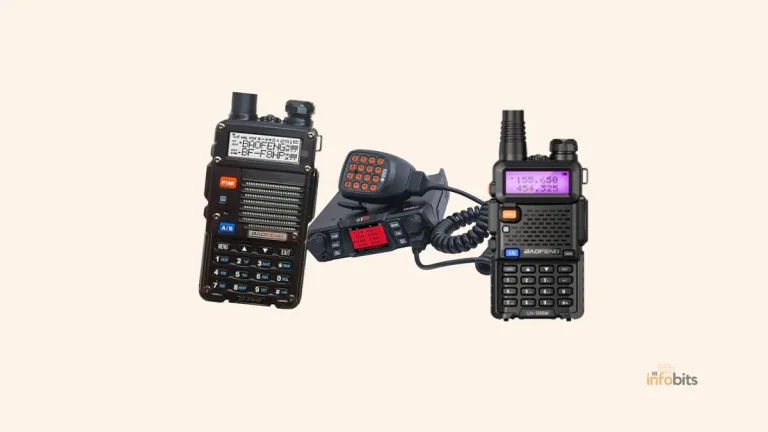
For shorter-range, everyday use, VHF and UHF handheld or mobile radios let you talk with other hams in your city or region, useful for coordinating during local events, staying in touch while off-grid, or simply chatting with nearby operators.
Related: Why VHF Radio Antenna Height Matters (With the Range Formula)
4. Talking to Astronauts and Satellites
Yes, really. Many astronauts on the International Space Station are licensed ham operators, and the ISS carries amateur radio equipment that’s occasionally used to make contact with schools and individual operators on Earth.
Beyond the ISS, dozens of amateur radio satellites orbit the planet, and operators with basic VHF/UHF equipment can bounce signals off them; no expensive ground station required.
5. Parks on the Air (POTA) and Summits on the Air (SOTA)
These are two of the fastest-growing activities in the hobby right now. POTA involves setting up a portable station in a national, state, or local park and making contacts, while SOTA does the same from mountain summits.
Both combine outdoor recreation with radio operating, and both have active communities that track activations and award recognition for reaching parks or summits. POTA in particular has been widely credited with bringing new energy ( and new operators) into the hobby over the past several years.
6. Digital Modes and Data Communication
Modern ham radio isn’t just voice and Morse code. Digital modes like FT8 (a weak-signal mode that can complete contacts with extremely low power, even across continents), DMR, D-STAR, and Winlink (which sends actual email over radio, useful when the internet is down) let operators exchange text, images, and structured data directly over the airwaves.
Digital modes have become especially popular for POTA activations and general HF operating, since software can decode signals too weak for the human ear to make out.
7. Morse Code (CW)
Despite no longer being required for licensing, Morse code ( called “CW” (continuous wave) among hams) remains actively used and even preferred by many operators.
It can get through in weak-signal conditions where voice can’t, and a dedicated community of CW enthusiasts keeps the mode very much alive, particularly in SOTA and DX contesting circles.
8. Contesting and Awards Chasing
Organized contests challenge operators to make as many contacts as possible within a set time window, often targeting specific regions, countries, or grid squares.
Beyond contests, hams also chase awards for things like contacting all 50 US states, a certain number of countries, or specific island or summit programs, turning the hobby into an ongoing, structured challenge.
9. Electronics Experimentation and Homebrewing
A large part of the ham community builds and modifies their own equipment, including antennas, radios, amplifiers, and accessories, rather than buying everything off the shelf.
This “homebrewing” tradition is one of the original reasons the FCC created the amateur radio service in the first place: to cultivate a pool of people who genuinely understand radio technology, not just operate it.
10. Storm Spotting and Weather Reporting
Many ham operators participate in SKYWARN, a National Weather Service program that trains volunteers to report real-time severe weather conditions directly to meteorologists, often providing ground-truth information faster than automated systems can detect it.
11. Public Service and Event Support
Marathons, parades, bike races, and other large public events frequently rely on ham radio operators for communication support, since amateur radio provides reliable coordination in situations where commercial cell networks can become overloaded by crowd traffic.
12. Building Genuine Community
Beyond the technical uses, ham radio functions as a genuine social network that predates the internet by decades.
Operators join local clubs (there are thousands across the US alone), participate in scheduled “nets” (regular group check-ins on a shared frequency), and connect with communities like the Amateur Radio subreddit, which has grown to well over 100,000 members swapping advice, gear reviews, and stories.
Why Ham Radio Still Matters in 2026
It’s a fair question. In a world of smartphones, satellite messengers, and near-universal internet access, why does a century-old radio hobby still have millions of active participants?
It works when nothing else does. Cell towers, internet infrastructure, and even satellite services can fail or become overloaded during major disasters.
Ham radio’s decentralized nature ( every operator has their own independent equipment) means there’s no single point of failure the way there is with commercial networks.
It doesn’t depend on anyone else’s infrastructure. A licensed operator with a radio and an antenna can communicate without a subscription, a data plan, or someone else’s server staying online.
The underlying skills stay relevant. According to the American Radio Relay League (ARRL), the core radio principles hams learn apply directly to modern technologies like 4G, 5G, Wi-Fi, and Bluetooth, since all of them are, at their core, forms of radio communication.
It’s genuinely growing, not just surviving. Activities like POTA and SOTA have pulled in real numbers of new, often younger operators over the past several years. This isn’t a hobby coasting purely on nostalgia.
What Do You Need to Get Started?
Getting Licensed
In the US, you need an FCC amateur radio license, earned by passing a written, multiple-choice exam administered by volunteer examiners. There are three progressive license classes:
| License Class | Exam Questions | What It Unlocks |
|---|---|---|
| Technician | 35 questions | Full access to VHF/UHF bands (local communication), limited HF privileges |
| General | 35 questions | Broad access to HF bands (long-distance/international communication) |
| Amateur Extra | 50 questions | Full access to all amateur bands and modes |
None of the three levels require learning Morse code anymore, which has made getting licensed significantly more accessible than it was a generation ago.
Most people study using an app or online course and pass the Technician exam within a few weeks of casual study.
Related: How to Get a Ham Radio License: Complete Step-by-Step Guide
What It Costs
Getting started is more affordable than most people expect:
- Exam fee: Free to around $15, depending on the testing group
- Study materials: Typically under $40 for a book or app-based course
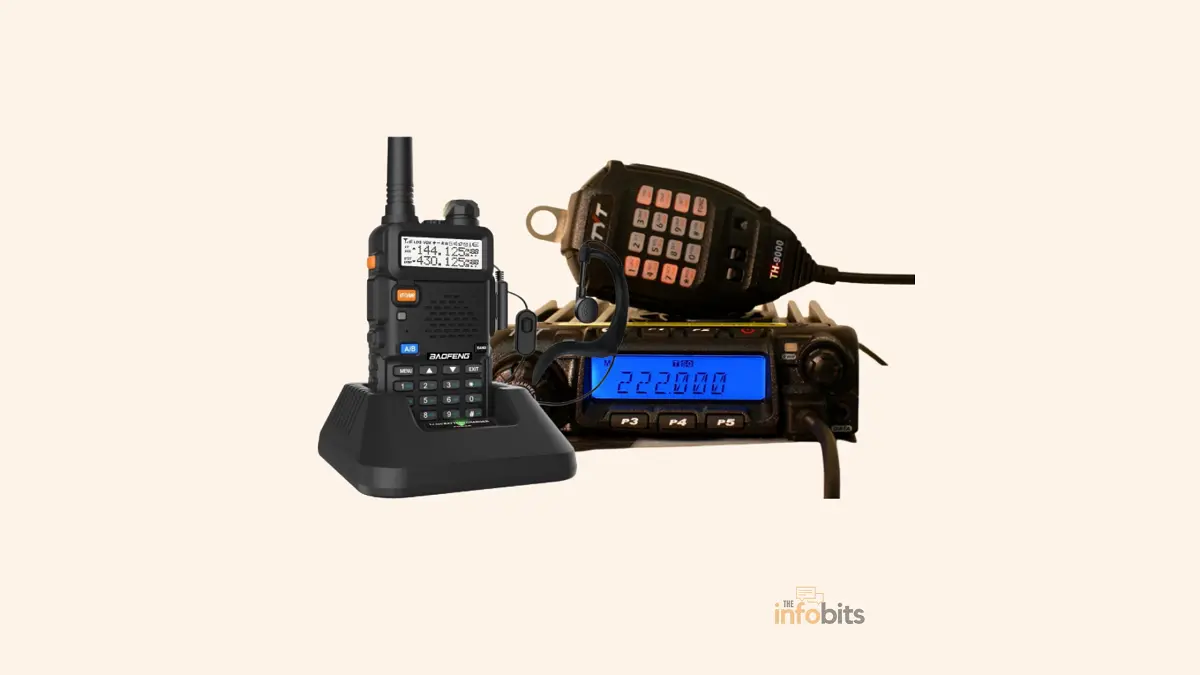
- First radio: Budget handheld VHF/UHF radios start around $30–$70
- A solid intermediate setup: Roughly $200 covers a capable radio plus basic accessories
Getting licensed and making your first contacts typically costs well under $200 total, and many local clubs offer free or low-cost classes to help newcomers along the way.
Related: Best Ham Radio for Beginners: Top Picks with Buying Guide
Ham Radio vs. Other Radio Services
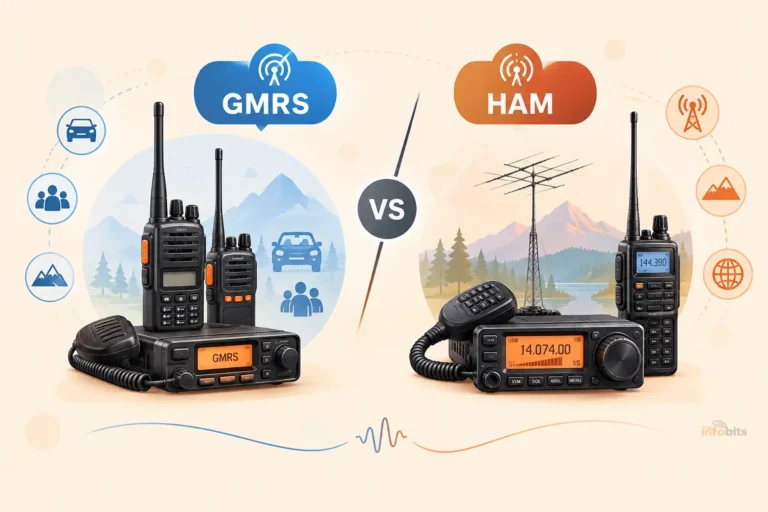
People often confuse ham radio with CB radio or GMRS, but the differences matter:
- CB radio requires no license, but is limited to 40 channels and low power, mainly for short-range local chat.
- GMRS requires a simple license (no exam) and offers more range and repeater access than CB, but far less flexibility than ham radio.
- Ham radio requires passing an exam but unlocks the widest range of frequencies, the highest legal power levels, and international-distance communication that neither CB nor GMRS can match.
For a full breakdown of how these compare and which one fits your needs, see our complete Ham Radio vs. CB Radio vs. GMRS comparison.
Conclusion
Ham radio is much more than an old communication hobby. It is a practical skill, a reliable backup communication system, and a fun way to connect with people around the world.
Whether you want to prepare for emergencies, talk to operators in other countries, contact astronauts on the International Space Station, enjoy activities like Parks on the Air (POTA) and Summits on the Air (SOTA), or experiment with digital modes such as FT8 and Winlink, amateur radio offers something for almost everyone.
One of the biggest reasons ham radio continues to grow is its independence. It does not rely on cell towers, internet connections, or monthly subscriptions. With the right equipment and a valid FCC license, you can communicate locally or across continents using your own radio station.
At the same time, the hobby helps you learn about radio technology, antennas, electronics, and wireless communication in a hands-on way.
Getting started is also easier than many people think. Morse code is no longer required for a license, entry-level radios are affordable, and many local clubs help beginners learn the basics. As your experience grows, you can explore new bands, digital technologies, contests, public service events, and many other parts of the hobby.
Frequently Asked Questions
What is ham radio used for?
Ham radio is used for emergency and disaster communication, long-distance and local conversations with other operators, satellite and space communication, outdoor activities like POTA and SOTA, digital data exchange, contesting, and hands-on electronics experimentation.
Is ham radio still relevant in 2026?
Yes. Ham radio remains essential for emergency communication when normal infrastructure fails, and activities like Parks on the Air have driven real growth in new licensees over recent years, alongside its established roles in public service and technical education.
Do I need a license to use ham radio?
Yes, operating on amateur radio frequencies in the US requires an FCC license earned by passing a written exam, unlike CB radio, which requires no license at all.
Do I need to learn Morse code to get a ham radio license?
No. Morse code is no longer required for any US amateur radio license class, though many operators still learn and actively use it because it works well in weak-signal conditions.
What’s the difference between ham radio and CB radio?
Ham radio requires a license and offers far greater frequency range, power, and distance capability, while CB radio requires no license but is restricted to 40 channels and low power for short-range use.
Can ham radio operators talk to astronauts?
Yes. Many astronauts aboard the International Space Station are licensed ham operators, and the ISS carries amateur radio equipment used for occasional contacts with operators and schools on Earth.
What is POTA in ham radio?
POTA (Parks on the Air) is a program where licensed operators set up portable radio stations in parks and make contacts, combining outdoor activity with amateur radio operating; it’s one of the fastest-growing activities in the hobby.
How much does it cost to get started with ham radio?
Getting licensed and buying a basic handheld radio typically costs under $200 total, including the exam fee, study materials, and an entry-level radio.
What is FT8 in ham radio?
FT8 is a popular digital mode that allows operators to make reliable contacts using very low power and weak signals, often completing global contacts that would be impossible using voice alone.
How does ham radio help during emergencies?
Because it doesn’t depend on cell towers, the internet, or the power grid, ham radio often keeps working when other communication systems fail, and trained volunteer networks like ARES coordinate directly with emergency responders during disasters.
What is the difference between Technician, General, and Amateur Extra licenses?
Technician grants VHF/UHF access with limited HF privileges, General adds broad access to long-distance HF bands, and Amateur Extra unlocks every amateur band and mode, with exams increasing in difficulty at each level.
Can I talk to people internationally with ham radio?
Yes, HF (high frequency) equipment allows licensed operators to communicate internationally by bouncing signals off the atmosphere, without relying on the internet or cellular networks.
What does “ham” in ham radio mean?
The exact origin is debated, but the most common explanations are that it derives from “amateur,” or that it began as a mildly disparaging term used by professional telegraph operators for amateurs, which the amateur community later embraced as a badge of honor.
Is ham radio a good hobby for emergency preparedness?
Yes. Many people get licensed specifically for emergency preparedness, since ham radio provides an independent communication method that doesn’t rely on infrastructure that can fail during a disaster.
What equipment do I need to start?
A basic handheld VHF/UHF radio (often called an HT) and a passed Technician exam are enough to get started; more advanced HF equipment for long-distance communication can be added later as your license class and interests grow.
We hope this guide has given you a clear picture of what ham radio is used for and why millions of people still enjoy it today.
If you found this article helpful, please share it with others who are curious about amateur radio. You can also follow The Infobits on Facebook and X (formerly Twitter) for more easy-to-follow technology, networking, and radio communication guides.
Also, do sign up for our free newsletter for more telecom and radio guides, and bookmark this page for future reference. In addition, we ask that you bookmark this page for future reference.