
Malwarebytes vs Kaspersky (2026): Is Kaspersky Even Legal?
Quick answer: As of September 2024, Kaspersky antivirus software cannot be legally sold in the United States, and existing US customers no longer receive security updates. The U.S. government banned it over national security concerns. If you’re in the US, this makes the comparison largely moot: Malwarebytes is the available, supported option. Outside the US, Kaspersky remains a well-reviewed, feature-rich suite that independent labs continue to rate highly, and it’s worth comparing directly against Malwarebytes on merit.
Choosing antivirus software used to come down to detection rates, pricing, and features. In 2026, for Malwarebytes vs. Kaspersky specifically, there’s a more basic question to answer first: can you even buy Kaspersky where you live?
We’ll cover that, and then give you a genuine, feature-by-feature comparison for readers everywhere the choice is still live.
The Kaspersky US Ban: What You Need to Know
In June 2024, the U.S. Department of Commerce’s Bureau of Industry and Security issued a final determination prohibiting Kaspersky Lab, Inc. and its affiliates from selling antivirus and cybersecurity products in the United States, citing an “undue or unacceptable” national security risk tied to the company’s Russian ownership.
The ban took effect on September 29, 2024.
Here’s what that actually means in practice:
- New sales are illegal. Kaspersky cannot legally sell new licenses in the US, and no legitimate retailer should be offering them.
- Existing installs stopped receiving updates. As of the ban date, Kaspersky can no longer provide antivirus signature updates or codebase updates to US customers, meaning any copy still running in the US is not protected against new threats.
- US subscribers were auto-migrated. In September 2024, many US-based Kaspersky customers had their software automatically replaced with a different product, UltraAV, sometimes with little warning; a transition that drew criticism for how it was communicated.
- This is separate from Kaspersky’s actual malware detection quality. The ban is about the jurisdictional risk of a Russian company potentially being compelled to act against US interests, not a finding that the software itself performs poorly. Independent testing labs have continued to rate Kaspersky’s detection capabilities highly even after the ban.
- The ban doesn’t apply outside the US. Kaspersky continues to operate and sell normally in most other countries.
If you’re reading this from the US, the practical takeaway is straightforward. Kaspersky isn’t a real option for you right now, regardless of how it compares feature-for-feature. If you’re outside the US, the rest of this comparison applies to you directly.
Malwarebytes vs Kaspersky: At a Glance
| Category | Verdict |
|---|---|
| Availability | Malwarebytes: available everywhere. Kaspersky: banned for sale/updates in the US as of Sept 2024; available elsewhere. |
| Malware Detection | Both score well in independent labs; Kaspersky has historically edged ahead on false-positive rates, though Malwarebytes has closed the gap. |
| Feature Set | Kaspersky’s paid tiers include more built-in extras (firewall, parental controls, password manager); Malwarebytes is more narrowly focused on core malware protection plus a bundled VPN on higher tiers. |
| System Performance | Both are lightweight in current independent testing; neither is a meaningful drag on modern hardware. |
| Pricing | Malwarebytes Standard starts around $44.99/year for one device; pricing tiers scale up with more devices and features (VPN, identity protection). |
| Ease of Use | Both have simple, approachable interfaces suitable for non-technical users. |
| Support | Malwarebytes has historically scored better in independent customer satisfaction tracking. |
Related: Best Password Managers 2026: Tested Picks for Every Need
Feature Comparison
Malwarebytes
Malwarebytes’ free tier is a manual, on-demand scanner only, useful for a one-off cleanup, but it doesn’t run in the background or stop an active infection as it happens.
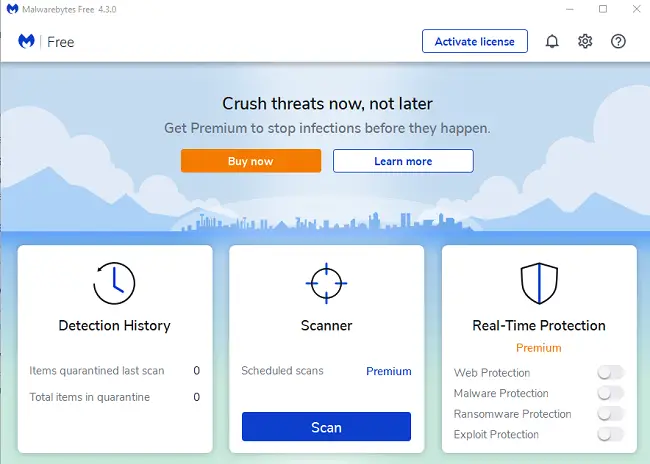
The paid tiers (Malwarebytes now organizes these as Standard, Plus, and Ultimate) add real-time protection against malware, ransomware, and exploits, plus web protection that blocks known malicious sites before they load.
Malwarebytes Plus bundles in a VPN (built on infrastructure Malwarebytes gained through its 2024 acquisition of AzireVPN), which is a genuine, independently audited no-log VPN rather than a throwaway bundled extra. Ultimate adds identity-theft monitoring and additional privacy tools on top of that.
Malwarebytes’ detection approach combines traditional signature-based scanning with heuristic (behavior-based) analysis to catch new, previously unseen threats. This is useful against zero-day malware that hasn’t been catalogued yet.
Kaspersky
Where it remains available, Kaspersky’s product line is broader. The entry paid tier, Kaspersky Anti-Virus, covers core real-time and on-demand malware protection.
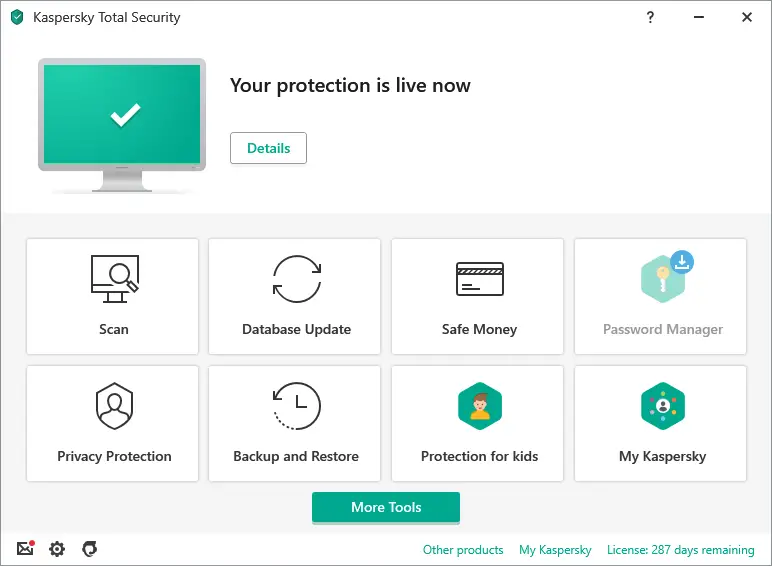
Moving up to Kaspersky Internet Security or Total Security adds a two-way firewall, a “Safe Money” feature that hardens your browser specifically during banking and shopping sessions, parental controls, a password manager, and a file shredder for permanently deleting sensitive files.
Kaspersky also uses cloud-assisted detection: when its scanner encounters something unfamiliar, it can send the sample to Kaspersky’s cloud infrastructure for deeper machine-learning analysis, which has historically contributed to strong detection rates and low false-positive counts in independent testing.
Important for US readers: none of the above features matter in practice if you can’t legally purchase or receive updates for the software.
Independent Test Lab Results (Most Recent Available)
Antivirus performance changes from testing cycle to testing cycle, so treat any specific score as a snapshot rather than a permanent ranking. Check AV-Test.org and AV-Comparatives.org directly for the latest cycle before making a final decision.
- AV-TEST (early 2026 home-user Windows cycle): Kaspersky Premium scored a perfect 18/18 across protection, performance, and usability categories.
- AV-Comparatives (2025 summary report): Kaspersky earned Advanced+ across all seven test categories, including Gold for malware protection (99.99% detection) and Gold for the lowest false-positive count.
- Malwarebytes (early 2026 real-world protection testing): Blocked 100% of test threats, but recorded a notably higher false-positive count than most competitors in the same cycle. This is worth knowing if you’re sensitive to legitimate files or sites occasionally getting flagged.
Both products continue to perform competitively on raw detection. The meaningful differentiator for most readers in 2026 isn’t detection quality. It’s availability, feature breadth, and (for Kaspersky specifically) the jurisdictional question covered above.
Pricing (2026)
Malwarebytes:
- Free: on-demand scanning only, no real-time protection
- Standard: around $44.99/year for one device – real-time protection, ransomware and exploit protection, web protection
- Plus: adds a bundled VPN
- Ultimate: adds identity-theft monitoring and additional privacy tools
Multi-device and multi-year plans bring the effective per-device cost down; check Malwarebytes’ current pricing page on Amazon for exact figures, since these are adjusted periodically.
Kaspersky (where legally available): Kaspersky offers several security plans for home users. The basic Anti-Virus plan is mainly for Windows PCs. Internet Security adds support for more platforms and includes extra features. Total Security offers the most complete set of features. It also includes tools such as a password manager and file shredder.
The price usually depends on the number of devices you want to protect.
Kaspersky’s plans and prices can change over time. Availability also depends on the country. If Kaspersky is legally available in your region, check its official website for the latest plan details and pricing.
Ease of Use
Both companies keep their interfaces approachable for non-technical users. Malwarebytes uses a clean dashboard with a clear “protected” status indicator and straightforward access to scan types and settings.
Kaspersky’s interface follows a similar pattern, with a protection-status banner and function icons; some users find Kaspersky’s approach to upselling premium features less intrusive than Malwarebytes’ in-app prompts on the free tier, though both nudge free users toward upgrading.
Support
Independent customer-satisfaction tracking has consistently shown Malwarebytes rated more favorably than Kaspersky for support responsiveness and resolution, based on aggregated review platforms.
This gap predates the US ban and reflects genuine differences in support quality rather than anything related to it.
Should You Use Both Together?
No. Running two full antivirus suites simultaneously is a common mistake. Real-time protection engines from two different vendors can conflict with each other, sometimes flagging each other’s processes as suspicious or fighting over access to the same files, which can slow your system down or create false alarms rather than adding meaningful extra protection.
If you want a second opinion, use one full-time real-time antivirus plus an on-demand-only scanner (like Malwarebytes’ free tier) for occasional manual checks, rather than two real-time engines running at once.
Myth vs. Fact
Myth: The Kaspersky ban means the software itself is malicious or ineffective. Fact: The ban is based on the jurisdictional risk of a Russian company potentially being compelled by Russian law to act against US interests. It is not due to a finding that Kaspersky’s malware detection is poor. Independent labs have continued to rate its detection highly even after the ban took effect.
Myth: If I already have Kaspersky installed in the US, it’s still protecting me. Fact: Without ongoing signature and codebase updates, an installed copy can’t defend against newly emerging threats. If you’re a US-based holdover Kaspersky user, switching to a supported alternative is a genuine security concern, not just a compliance formality.
Myth: Free antivirus is just as good as paid. Fact: Free tiers from both companies are generally limited to on-demand, manual scanning rather than continuous real-time protection. This means that they can clean up an existing infection but won’t stop a new one as it happens. For always-on protection, a paid real-time tier from either company is the meaningful upgrade.
Final Thoughts
Choosing between Malwarebytes and Kaspersky in 2026 depends heavily on where you live. For readers in the United States, the decision is much simpler. Kaspersky is no longer a practical choice because its antivirus software cannot legally be sold in the US or supported with ongoing security updates. In that situation, Malwarebytes is the clear and supported option.
For readers outside the US, the Malwarebytes vs Kaspersky comparison is more balanced. Both products have strong malware detection capabilities and are designed to protect against modern online threats. Kaspersky continues to perform well in independent testing where it remains legally available. Malwarebytes, however, offers a simpler approach and remains widely available for US and international users.
The most important thing is not to rely on antivirus software that no longer receives regular security updates. Cyber threats change quickly. An outdated security program can leave your computer exposed to new malware, ransomware, and other threats.
Also, avoid running two full antivirus programs with real-time protection at the same time. This can cause conflicts and may actually create more problems than protection.
For most US readers, Malwarebytes is the more practical choice in 2026. If you live outside the United States, compare the features, pricing, and availability in your region before deciding.
No matter which security software you choose, keep it updated, use strong passwords, and stay cautious about suspicious links and downloads. Good antivirus software is an important layer of protection, but safe online habits still matter just as much.
Frequently Asked Questions
Is Kaspersky banned in the United States?
Yes. As of September 29, 2024, Kaspersky cannot legally sell antivirus software in the US or provide updates to existing US installations, following a U.S. Department of Commerce determination citing national security concerns.
Can I still use Kaspersky if I already have it installed in the US?
Technically, the software may still run, but without security updates it can no longer protect against newly emerging threats, so continuing to rely on it is not advisable. Many US users were automatically migrated to UltraAV in September 2024.
Is Kaspersky available outside the United States?
Yes. The ban applies specifically to the US market. Kaspersky continues to operate and sell its products normally in most other countries.
What is UltraAV, and why did my Kaspersky software turn into it?
UltraAV is the product US-based Kaspersky customers were automatically transitioned to in September 2024 as part of Kaspersky winding down its US operations to comply with the ban. It’s a separate company’s product, not a Kaspersky rebrand.
Which is better for malware detection, Malwarebytes or Kaspersky?
Both perform well in current independent lab testing. Kaspersky has historically shown a lower false-positive rate, while Malwarebytes has also posted strong detection rates, with a comparatively higher false-positive count in some recent testing cycles. Check the latest AV-Test or AV-Comparatives results directly, since rankings shift between testing cycles.
Does Malwarebytes include a VPN?
Yes, on the Plus and Ultimate tiers. The VPN is built on infrastructure from Malwarebytes’ 2024 acquisition of AzireVPN and has passed independent no-log audits.
Is it safe to use Malwarebytes and Kaspersky at the same time?
It’s not recommended. Running two real-time antivirus engines simultaneously can cause conflicts, performance issues, and false alarms. Use one full-time real-time antivirus and, if you want a second opinion, an on-demand-only scanner rather than a second real-time engine.
Why was Kaspersky banned specifically, rather than other antivirus companies?
The ban centers on Kaspersky’s Russian ownership and the US government’s concern that Russian law could compel the company to act against US national security interests, a jurisdictional risk that doesn’t apply to antivirus vendors headquartered in the US or allied countries.
Is the free version of Malwarebytes enough protection?
For most users who want always-on protection, the answer is no. The free tier is a manual, on-demand scanner rather than continuous real-time protection. It’s useful as a supplementary cleanup tool alongside a full-time antivirus, not as a replacement for one.
Does the Kaspersky ban affect businesses as well as individual consumers?
Yes. The ban covers both public and private sector use, and businesses that were using Kaspersky products before the ban were encouraged to migrate to alternative solutions well ahead of the September 2024 deadline.
What should US-based Kaspersky users do now?
Move to a supported antivirus product as soon as possible if you haven’t already. Malwarebytes is one straightforward option covered in this comparison; the key priority is ensuring you have a product that’s still receiving active threat-signature updates.
Has independent testing continued to rate Kaspersky highly since the ban?
Yes, in markets where it’s still sold and updated. The ban is a US-specific legal and jurisdictional action, not a technical finding, and Kaspersky has continued to score well with labs like AV-TEST and AV-Comparatives in regions where it remains available.
Follow The Infobits on Facebook, Instagram, and X for more cybersecurity tips, software comparisons, and practical technology guides.
We also request that you bookmark this page for future use. Sign up for our free newsletter as well to receive new information in your inbox regularly and stay technically up to date.
Disclosure: If you follow our links to a retailer’s website and make a purchase, we will receive an affiliate commission on some, but not all, of the products or services we recommend.