How to Convert VCD to MP4: The Complete 2026 Guide
Quick answer: The easiest free way to convert a VCD to MP4 is with VLC Media Player: insert the disc, go to Media > Convert/Save, select the Disc tab, choose your VCD, pick “Video – H.264 + MP3 (MP4)” as the profile, and hit Start. If your computer doesn’t have a CD drive, most laptops made after 2015 don’t, you’ll need a cheap external USB optical drive first.
If you’ve still got a stack of VCDs from the ’90s or 2000s sitting in a drawer, you’re not alone. VCD was one of the most widely used home video formats before DVD took over, especially across Asia.
The problem is that almost nothing plays them natively anymore. Converting your VCDs to MP4 is the most reliable way to keep those videos watchable on a phone, smart TV, or streaming device for years to come.
This guide walks through everything: what a VCD actually is, why simply copying the files can ruin them, the exact steps to convert with VLC and dedicated software, what to do if your PC has no disc drive, and how to fix the most common conversion problems.
What Is a VCD, and Why Convert It to MP4?
VCD (Video CD) is a format created in 1993 for storing video on a standard CD, using MPEG-1 compression.
It offers roughly VHS-quality video and was hugely popular for distributing movies and music videos before DVD became affordable, particularly across Southeast Asia and other regions where it largely replaced VHS.
MP4 (MPEG-4 Part 14), by contrast, is a modern, highly compressed container format supported by virtually every phone, tablet, smart TV, game console, and media player made in the last two decades.
Converting matters because:
- Most modern devices can’t read VCDs at all – no built-in optical drive, no VCD-compatible player software.
- MP4 preserves your memories in a future-proof format. Discs degrade, scratch, and eventually stop reading reliably; a digital file backed up in two places essentially doesn’t.
- You gain flexibility. Once it’s an MP4, you can stream, edit, upload, or share it instantly.
Related: How to Convert DVD to Digital? Simple Methods
Before You Start: What You’ll Need
- A computer with a CD/DVD drive (internal or external – more on this below)
- Your VCD disc(s)
- Free disk space; MPEG-1 VCD content converts to a similarly sized or slightly smaller MP4, so budget around 600–800MB per disc
- VLC Media Player (free) or a dedicated VCD converter, depending on the method you choose
Method 1: Convert VCD to MP4 with VLC (Free)
VLC is a free, open-source media player available for Windows, Mac, and Linux, and it doubles as a capable format converter. It’s the best starting point for most people because it costs nothing and handles the vast majority of standard VCDs without issue.
Step 1: Insert your VCD into your computer’s CD/DVD drive.
Step 2: Launch VLC Media Player.
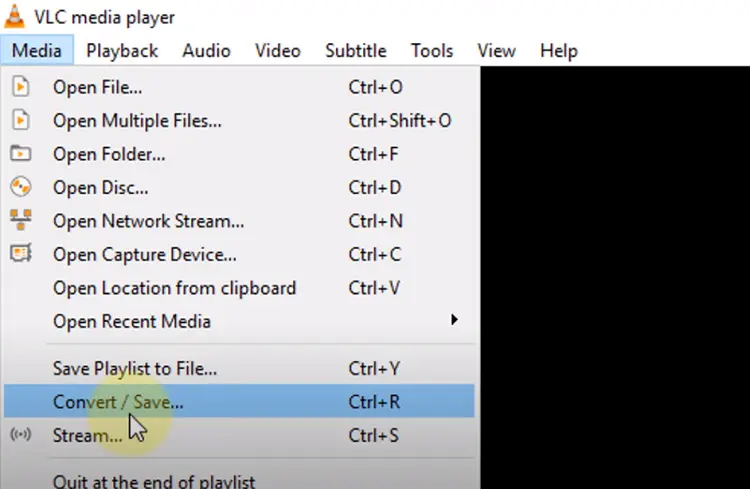
Step 3: From the top menu, go to Media > Convert/Save (or press Ctrl+R on Windows).
Step 4: Click the Disc tab.
Step 5: Under Disc Selection, choose VCD, select your disc device from the dropdown, and check the box for No disc menus.
Step 6: Click the dropdown arrow next to the Convert/Save button (not the play button), and select Convert.
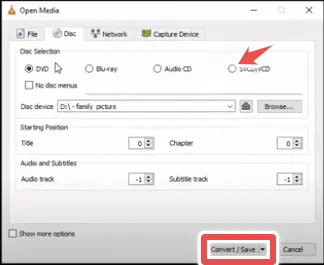
Step 7: Under Profile, choose Video – H.264 + MP3 (MP4).
Step 8: Click Browse next to Destination, choose where you want the file saved, and give it a filename ending in .mp4.
Step 9: Click Start. VLC will process the disc and save the finished MP4 to your chosen folder. A short VCD (20–30 minutes) usually finishes in a few minutes; a full-length movie can take longer depending on your computer.
Known VLC limitations: it can’t convert copy-protected or damaged VCDs, doesn’t preserve original menus, and some users report that the converted file has no audio track. If that happens, see the troubleshooting section below or try a dedicated converter instead.
Method 2: Convert VCD to MP4 with Dedicated Software
If VLC gives you trouble, or you’re converting a large batch of discs, purpose-built VCD converters are worth the switch. They’re generally more forgiving with older, scratched, or oddly encoded discs, and most support batch conversion, so you’re not repeating the process disc by disc.
Popular options include:
- HD Video Converter Factory Pro: straightforward interface, supports batch conversion, and includes basic trim/merge/crop editing before export.
- VideoSolo Video Converter Ultimate: supports over 1,000 output formats and handles high-resolution upscaling if you want to enhance old, low-res VCD footage.
- iDealshare VideoGo: built specifically around converting older disc formats like VCD (DAT files) to modern formats.
The general workflow across these tools is nearly identical:
- Install the software and launch it.
- Click Add Files (or drag and drop) to import the VCD’s DAT file(s), or point the tool directly at the disc.
- Choose MP4 as the output format from the preset/profile list.
- Set your output folder.
- Click Convert (or Run) to start.
Because these are paid or freemium tools, check the trial limitations (some watermark output or cap file length) before committing to a purchase.
Method 3: Convert VCD to MP4 Online
If you’d rather not install anything, online converters like Convertio, Media.io, and Zamzar let you upload a VCD’s DAT file and download an MP4 in return.
Step 1: Go to your chosen online converter.
Step 2: Upload the DAT file (you’ll need to have already copied it off the disc . See the section below on why you shouldn’t do this carelessly).
Step 3: Select MP4 as the output format.
Step 4: Adjust resolution, bitrate, or frame rate if the tool offers those options.
Step 5: Click Convert, then download the finished file once processing completes.
Online tools are convenient for a one-off conversion but come with limitations: file size limits (often 100MB–1GB on free tiers), a dependency on a stable internet connection for both upload and download, and less consistent quality control than dedicated desktop software.
What If Your Computer Has No CD/DVD Drive?
This is the single biggest obstacle people run into today, and it’s one most guides skip entirely. Most laptops sold since around 2015 dropped optical drives completely. If yours did too, you have two options:
- Buy an external USB CD/DVD drive. These plug into any USB-A or USB-C port, are recognized automatically without extra drivers on Windows, Mac, or Linux, and typically cost less than a takeout dinner. A portable USB optical drive like Rioddas External CD/DVD Drive (view on Amazon) is genuinely the simplest fix if you plan on digitizing more than one or two discs; plug it in, and every method above works the same way.
- Use another computer that still has a built-in drive, then transfer the converted MP4 file to your main device afterward via USB drive or cloud storage.
Why You Should Never Just “Copy” the DAT File
A lot of quick “fixes” online tell you to simply drag the .DAT file off the VCD and rename it to .mpg. This sometimes works. But it’s risky, and it’s worth understanding why.
VCD video data is stored in CD-XA Mode 2 Form 2 sectors, which include extra header/sync information around the actual MPEG-1 video. A proper rip strips that overhead out; a plain file copy can leave it in, which sometimes causes garbled playback, sync issues, or files that certain players and editors refuse to open correctly.
For a cleaner result, use a tool built to handle this conversion properly. VLC’s disc conversion mode, or a dedicated DAT-to-MPG tool such as VCDGear or VCDEasy, both of which strip the sector overhead correctly before you convert further to MP4. It’s a small extra step that saves you from re-ripping a disc later.
Comparing Your Conversion Options
| Method | Cost | Best For | Limitations |
|---|---|---|---|
| VLC Media Player | Free | Most users, one-off conversions | No batch conversion in disc mode; occasional audio dropout |
| Dedicated software (HD Video Converter Factory Pro, VideoSolo, iDealshare VideoGo) | Free trial / paid | Large collections, damaged or tricky discs | Paid license for full features |
| Online converters (Convertio, Media.io, Zamzar) | Free (limited) / paid | Quick single conversions, no installs | File size caps, needs the DAT file pre-extracted, upload/download time |
Common Mistakes to Avoid
- Copying the DAT file and just renaming it. As covered above, this can leave corrupted sector data in the file. Convert properly instead.
- Assuming every online converter accepts a disc directly. Most only accept an already-extracted DAT file. You’ll need to pull it off the disc first.
- Skipping quality settings. Leaving bitrate and resolution on “default” can produce a noticeably worse MP4 than the source. Match or exceed the original bitrate where possible.
- Not testing the playback before deleting or losing the disc. Always play the finished MP4 all the way through before you consider the source disc expendable.
- Ignoring audio sync issues at the source. If the original VCD already has minor audio drift, no converter can fully fix that. It has to be addressed with resync tools separately.
Related: Convert CDA to MP3 Easily and Effortlessly: The Ultimate Guide
Troubleshooting Common Conversion Problems
The converted MP4 has no sound. This is a known VLC quirk with some VCDs. Try the conversion again using the “Video – H.264 + MP3 (MP4)” profile specifically (not a generic MP4 preset), or switch to a dedicated converter, which tends to handle audio tracks more reliably.
VLC won’t recognize the disc. Confirm the disc is clean and undamaged, try a different drive if you have access to one, and make sure you selected VCD (not DVD or Audio CD) under Disc Selection.
The conversion is extremely slow. Large software conversion loads are normal for older or lower-powered computers. Close other applications, and if you’re converting a whole collection, expect to queue conversions rather than run several at once.
Audio and video are out of sync in the output. This usually originates from the source VCD itself, especially if it’s old or was recorded on lower-end 1990s equipment. Some dedicated converters include a manual audio-delay adjustment that can help correct minor drift.
The converter says the disc is copy-protected. VLC can’t handle copy-protected VCDs. A dedicated ripping tool with copy-protection handling, or a different converter, may be required. Check the software’s feature list before purchasing.
The output file plays choppy or stutters. Lower the output resolution or bitrate slightly, or try converting on a computer with more processing power. This is more common with 4K-upscaling software options than with a straightforward same-resolution VCD to MP4 conversion.
Tips for the Best Possible Output Quality
- Match your output resolution to the source. VCD is a low-resolution format (roughly 352×240); scaling up doesn’t add real detail, it just produces a larger file.
- Use H.264 video with MP3 or AAC audio for the widest device compatibility.
- Keep bitrate reasonably high (VLC’s default is usually fine, but dedicated software often lets you push it higher) to avoid compounding compression artifacts on top of the VCD’s already-limited quality.
- Back up the finished MP4 in two places: a cloud drive and a local hard drive, for example, since the whole point of converting is to stop depending on a single aging disc.
- Label your files clearly (title, disc number, year) if you’re digitizing a large collection, so you’re not left guessing later.
Related: How to Convert CDs to Digital Files? Easy Ways to Rip a CD
Final Thoughts
Converting your VCDs to MP4 is one of the simplest ways to make sure old home videos, concert recordings, or movie collections don’t quietly become unwatchable as optical drives disappear from modern devices.
For most people, VLC is genuinely all you need. It’s free, works on Windows and Mac, and handles the vast majority of discs without a hitch.
If you run into audio issues, a damaged disc, or you’re digitizing dozens of VCDs at once, stepping up to dedicated software or an external drive solves the rest.
Once your videos are safely in MP4 format, back them up in two places, and you’ll never have to worry about a scratched disc taking your memories with it.
Frequently Asked Questions
Are there any free online tools available for VCD to MP4 conversion?
Yes, there are some free online programs for converting VCD to MP4. These online converters avoid the need to install software on your computer and provide a quick and easy solution to convert VCDs to MP4 format. However, it’s crucial to know that the functionality and features of various online tools might vary, so it’s best to stick with reputable and trustworthy solutions for a smoother and safer conversion procedure.
Will converting VCD to MP4 improve compatibility with modern devices?
Yes, converting VCD to MP4 can greatly increase compatibility with current devices. VCDs are an outdated format that may be incompatible with many contemporary devices and systems. You can ensure that your movies can be viewed on a wider range of devices, including smartphones, tablets, smart TVs, and media players, by converting them to the popular and widely accepted MP4 format.
Can I convert VCD to MP4 for free?
Yes. VLC Media Player is free and handles most VCD-to-MP4 conversions without any cost.
Do I need special software to convert VCD to MP4?
Not necessarily; VLC, which many people already have installed, can do it. Dedicated software is only needed for damaged discs, copy protection, or large batch jobs.
My laptop doesn’t have a CD drive. Can I still convert my VCDs?
Yes. A USB external CD/DVD drive plugs into any laptop and works exactly like a built-in drive for ripping and converting.
Will converting a VCD to MP4 improve the video quality?
No, converting changes the file format and compatibility, not the original resolution or quality. VCD is a lower-resolution format, and MP4 can’t add detail that wasn’t captured originally.
Why does my converted MP4 have no audio?
This is a known issue with some VLC conversions. Re-convert using the correct H.264 + MP3 profile, or try a dedicated VCD converter instead.
Is it safe to just copy the DAT file from a VCD and rename it to MPG?
It can work, but it risks leaving corrupted sector data in the file. A proper rip through VLC or a DAT-to-MPG tool like VCDGear is more reliable.
Can I convert VCD to MP4 on a Mac?
Yes. VLC and most dedicated conversion software support macOS, and the process is nearly identical to Windows.
How long does it take to convert a VCD to MP4?
A typical 20–74 minute VCD usually takes anywhere from a few minutes to around the length of the video itself, depending on your computer’s speed and the software used.
Can I convert multiple VCDs at once?
VLC converts one disc at a time. Most dedicated software tools support batch conversion if you’ve already extracted the DAT files to your hard drive.
What’s the difference between a VCD’s DAT file and an MP4 file?
DAT is MPEG-1 video wrapped in CD-XA sector formatting, meant to be read directly off a Video CD. MP4 is a modern, more efficient container format supported by virtually all current devices.
Can I edit the video after converting it to MP4?
Yes, once it’s in MP4 format, you can trim, merge, or edit it in any standard video editor, which usually isn’t possible with the raw VCD format.
Do online VCD to MP4 converters work directly from a disc?
No, nearly all online converters require you to upload an already-extracted DAT file rather than accessing the disc directly.
Why is my converted video choppy or stuttering?
This is usually a processing power issue during conversion, or an overly high output resolution/bitrate setting. Try lowering the output settings or using a more capable computer.
Are VCDs copy-protected?
Most consumer VCDs are not copy-protected, since the format predates widespread disc DRM, but some region-specific or later releases can be. If VLC refuses to convert a disc, copy protection is one possible cause.
What format should I choose for the best device compatibility?
MP4 with H.264 video and AAC or MP3 audio plays on essentially every modern phone, tablet, smart TV, and computer.
Can I convert VCD to MP4 without a computer?
Not practically, VCD ripping and conversion require a device with a disc drive and conversion software; there’s no reliable phone-only method.
Will my converted files play on my TV?
Yes, as long as the TV or connected streaming device supports MP4 playback, which almost all current smart TVs and streaming boxes do.
Is it worth paying for dedicated VCD converter software?
If you’re converting a handful of discs, free VLC is usually enough. If you have a large collection, damaged discs, or want batch processing and editing tools, paid software often saves significant time.
Please share this article with your friends and relatives if you find it useful.
We also ask that you bookmark this page for future reference, as we are constantly updating our articles with new information.
Sign up for our free newsletter as well to receive fresh information immediately in your inbox and keep technically up to date.
Disclosure: If you follow our links to a retailer’s website and make a purchase, we will get an affiliate commission on some, but not all, of the items or services we promote. This will cause no price change for you.