10 Best Free Audio Converter Software Programs in 2026
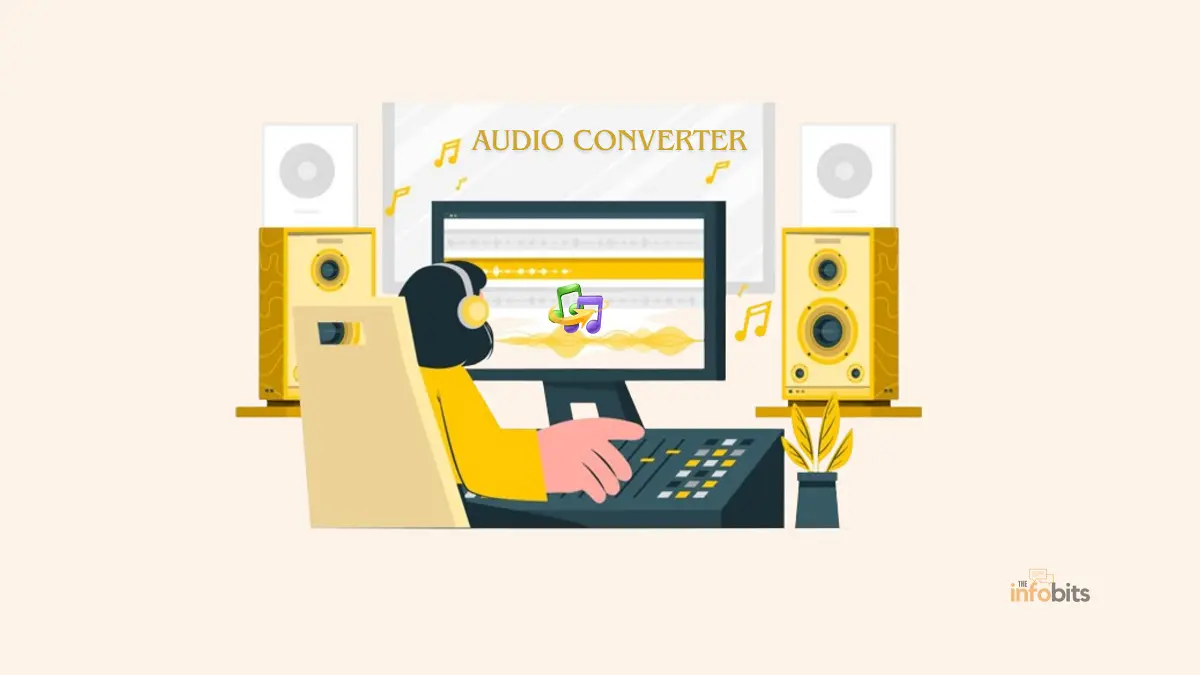
Audio files still don’t all play nicely together. A voice memo recorded as M4A won’t import into some older software, a FLAC rip from a CD is too large for a phone with limited storage, and a podcast episode downloaded as OGG might not play on every device you own.
An audio converter solves all of that. It takes a file in one format and re-encodes it into another, without you needing to know anything about codecs or bitrates.
The tricky part is that “free audio converter” is a crowded, messy search term. Plenty of sites use that phrase while actually being ad-heavy web wrappers, abandoned freeware from a decade ago, or “free” tools that quietly cap you at a few minutes of audio before asking for payment.
Below is a genuinely current list for 2026, tools we could verify are still maintained, still free (or clearly note where “free” comes with a real limitation), and safe to recommend.
Quick Picks: Best Free Audio Converters
Best Overall: Audacity
Best Dedicated Converter: fre:ac
Best for Power Users: FFmpeg
Best for Beginners: MediaHuman Audio Converter
Best for Privacy: Free Audio Converter (DVDVideoSoft)
Best for Extracting Audio from Video: WonderFox Free HD Video Converter Factory
Best for Simple Batch Jobs: Switch Audio File Converter (Free)
Best Web-Based (No Install): Convertio
Best for Occasional One-Off Conversions: Zamzar
Best for Mac Lossless Audio: XLD (X Lossless Decoder)
The Best Free Audio Converters: Reviewed
| Category | Software | Why It Wins |
|---|---|---|
| Best Overall | Audacity | Free, open-source, doubles as a full audio editor |
| Best Dedicated Converter | fre:ac | Preserves metadata, fast multi-core batch conversion |
| Best for Power Users | FFmpeg | Handles virtually any format via command line |
| Best for Beginners | MediaHuman Audio Converter | Genuinely simple drag-and-drop interface |
| Best for Privacy | Free Audio Converter (DVDVideoSoft) | All conversions happen fully offline |
| Best for Extracting Audio from Video | WonderFox Free HD Video Converter Factory | Handles 500+ formats, unlimited free use |
| Best for Simple Batch Jobs | Switch Audio File Converter (Free) | Clean interface, supports 40+ formats |
| Best Web-Based (No Install) | Convertio | Works entirely in-browser, broad format support |
| Best for Occasional One-Off Conversions | Zamzar | No install, works via browser or email |
| Best for Mac Lossless Audio | XLD (X Lossless Decoder) | The go-to Mac tool for lossless format conversion |
1. Audacity: Best Overall
Audacity is free, open-source, and has been the standard cross-platform audio tool for years, and it still holds up in 2026.
It’s technically an audio editor first, but its export function doubles as a capable converter: import an MP3, WAV, AIFF, or OGG file, make any edits you want (or none at all), and export to your target format.
Pros:
- Completely free with no feature gating
- Doubles as a full editing suite; trim, merge, apply effects, adjust levels
- Actively maintained, large community, extensive tutorials
- Cross-platform: Windows, macOS, and Linux
Cons:
- Steeper learning curve than a dedicated single-purpose converter
- Native format support is narrower than some competitors, unless you install the optional FFmpeg plugin for expanded format support
Best for: Anyone who wants a single free tool that can both edit and convert, rather than juggling two separate programs.
2. fre:ac: Best Dedicated Converter
fre:ac is free, open-source, and built specifically around audio conversion rather than trying to be an all-purpose media tool.
It preserves ID3 tags and metadata during conversion, a detail plenty of converters get wrong, and uses multi-core processing to speed through large batch jobs. It also includes a built-in CD ripper with automatic metadata lookup.
Pros:
- Completely free with no limits on file count, length, or batch size
- Preserves metadata and tags, which matters if you’re converting a music library
- Fast, multi-core batch processing
- Built-in CD ripper
Cons:
- Audio-only; no video or image conversion if you need a broader tool
- The interface is functional rather than polished
Best for: Anyone converting a large personal music collection who wants their album art, artist tags, and track numbers to survive the process.
3. FFmpeg: Best for Power Users
FFmpeg is the free, open-source engine that powers a huge number of other audio and video tools on this list (and elsewhere).
Used directly through the command line, it can convert between nearly any audio format that exists, with total control over bitrate, sample rate, channels, and codec.
Pros:
- Handles an enormous range of formats and codecs, including obscure ones
- Fully scriptable; ideal for converting hundreds of files with one command
- No file size or batch limits of any kind
- Completely free and open-source
Cons:
- Command-line only; no graphical interface out of the box
- Steep learning curve for anyone unfamiliar with terminal commands
Best for: Developers, podcasters, or anyone comfortable with a terminal who wants maximum flexibility and zero restrictions.
4. MediaHuman Audio Converter: Best for Beginners
MediaHuman Audio Converter keeps things refreshingly simple: drag your files in, pick an output format, and convert.
It supports a wide range of input and output formats, handles batch processing well, and includes a couple of genuinely useful extras, automatic splitting via CUE files and direct export to iTunes/Apple Music libraries.
Pros:
- About as simple a converter interface gets
- Batch conversion preserves folder structure for large libraries
- CUE-based splitting is handy for converting ripped full-album files into individual tracks
- Available for both Windows and Mac
Cons:
- Fewer advanced/expert-level options than FFmpeg or Audacity
- Interface hasn’t changed much in years, though it remains functional
Best for: First-time users who just want to drop in a file, pick a format, and be done with it.
5. Free Audio Converter (DVDVideoSoft): Best for Privacy
If keeping your files off someone else’s server matters to you, Free Audio Converter runs entirely offline; nothing you convert ever leaves your computer. It’s lightweight, installs quickly, and includes a handy audio joiner for combining multiple files into one.
Pros:
- 100% offline processing; no upload step, no privacy concerns
- Lightweight and fast to install
- Useful audio joiner feature for merging files
- Genuinely free with no time or file-length restrictions
Cons:
- DVDVideoSoft’s installer has, in the past, offered optional bundled extras during setup. Pay attention during installation and decline anything you don’t recognize
- The interface is basic compared to more actively redesigned competitors
Best for: Anyone converting sensitive or personal recordings who wants a guarantee that nothing gets uploaded anywhere.
6. WonderFox Free HD Video Converter Factory: Best for Extracting Audio from Video
Despite the name, this tool handles audio conversion just as well as video, supporting more than 500 formats and devices.
It’s a particularly strong choice if part of your workflow involves pulling the audio track out of video files, podcast clips, lecture recordings, or extracting a song from a music video.
Pros:
- Enormous format and device support (500+)
- All core features are free and unlimited
- Handles audio extraction from video cleanly
- Includes basic audio trimming and joining tools
Cons:
- Windows only
- Interface promotes the developer’s paid Pro version at points, though the free features remain fully functional
Best for: Anyone who regularly needs to pull audio out of video files, not just convert between audio formats.
7. Switch Audio File Converter (Free): Best for Simple Batch Jobs
Switch, from NCH Software, is a straightforward converter supporting more than 40 formats. The free version caps batch conversions at five files at a time, a real limitation for large libraries, but plenty for occasional use, and its clean interface makes it easy to pick up without a learning curve.
Pros:
- Supports a wide range of common and less common formats
- Simple, uncluttered interface
- Can extract audio from video files
- Available for both Windows and Mac
Cons:
- Free tier limits batch conversions to five files at once
- Larger conversion jobs will require the paid Plus version
Best for: Occasional conversions of a handful of files at a time, rather than large libraries.
8. Convertio: Best Web-Based Option
Convertio runs entirely in your browser, so there’s nothing to install. It supports a broad range of audio formats, handles batch conversion, and processes files in the cloud rather than using your device’s resources. It is useful if you’re on an older or lower-powered machine.
Pros:
- No installation required; works on any device with a browser
- Broad format support, including many less common codecs
- Files are automatically deleted from their servers after a set period
Cons:
- Free tier limits file size and daily conversion count
- Requires an internet connection and file upload, which won’t suit everyone’s privacy preferences
Best for: Quick, occasional conversions when you don’t want to install anything, especially on a shared or work computer.
9. Zamzar: Best for Occasional One-Off Conversions
Zamzar has been around for a long time and remains a solid choice for a single, occasional conversion. Beyond the standard browser upload, it also supports converting files by email. Attach a file and send it to a designated address to receive the converted version back.
Pros:
- No installation needed
- Unusual email-based conversion option, useful in restricted environments
- Works across Windows, macOS, and Linux since it’s entirely browser-based
Cons:
- Conversion speed is noticeably slower than most competitors
- Free tier caps file size, and email conversion is limited to 1MB per file
Best for: A single quick conversion when you don’t want to sign up for or install anything.
10. XLD (X Lossless Decoder): Best for Mac Lossless Audio
If you’re on a Mac and care about lossless formats specifically, FLAC, ALAC, APE, and similar, XLD is the tool the Mac audiophile community has relied on for years. It’s built for accuracy rather than flash, verifying rips and conversions to make sure nothing is lost along the way.
Pros:
- Specifically built for lossless format accuracy
- Free and actively maintained
- Handles CD ripping with verification, not just file conversion
Cons:
- Mac only
- Interface is utilitarian, aimed at users who already know what they want
Best for: Mac users converting or ripping lossless audio who care about bit-perfect accuracy over a flashy interface.
Comparison Table
| Tool | Platform | Install Required | Batch Conversion | Best For |
|---|---|---|---|---|
| Audacity | Windows, Mac, Linux | Yes | Yes | Editing + converting in one tool |
| fre:ac | Windows, Mac, Linux | Yes | Yes | Large libraries, CD ripping |
| FFmpeg | Windows, Mac, Linux | Yes (command line) | Yes (scriptable) | Total format flexibility |
| MediaHuman Audio Converter | Windows, Mac | Yes | Yes | First-time users |
| Free Audio Converter (DVDVideoSoft) | Windows | Yes | Yes | Offline, private conversions |
| WonderFox Free HD Video Converter Factory | Windows | Yes | Yes | Pulling audio out of video files |
| Switch Audio File Converter (Free) | Windows, Mac | Yes | Limited (5 files/batch on free tier) | Occasional small batches |
| Convertio | Any (browser) | No | Yes | Quick conversions without installing anything |
| Zamzar | Any (browser) | No | Limited to the free tier | A single file, once in a while |
| XLD | Mac | Yes | Yes | Lossless audio (FLAC, ALAC, APE) on Mac |
How to Choose the Right One for You
- Converting a large personal music library? fre:ac or MediaHuman will preserve your tags and folder structure.
- Need to convert just one file, right now, without installing anything? Convertio or Zamzar get it done from a browser.
- Comfortable with a command line and want total control? FFmpeg has no real limits.
- Want to edit and convert in the same tool? Audacity handles both.
- On a Mac and care about lossless quality specifically? XLD is purpose-built for that.
- Pulling audio out of video files regularly? WonderFox Free HD Video Converter Factory is built for exactly that workflow.
Common Mistakes to Avoid
- Uploading sensitive recordings to a random web converter. If privacy matters, stick to offline tools like Free Audio Converter, fre:ac, or Audacity.
- Assuming “free” means unlimited. Several tools cap file length, batch size, or daily conversions on their free tier; check before committing to a large job.
- Skipping through installer screens without reading them. Older freeware in particular has a history of bundling optional extras during setup; take the “custom install” path and decline anything unfamiliar.
- Converting lossy-to-lossy repeatedly. Converting an MP3 to another lossy format and back again degrades quality each time; always convert from the highest-quality source file you have.
- Ignoring metadata. If your files are part of an organized music library, choose a converter (like fre:ac or MediaHuman) that explicitly preserves ID3 tags, or you’ll lose artist, album, and track info in the process.
Conclusion
There’s no single “best” free audio converter. The right pick depends entirely on what you’re converting and how often.
For most people building or maintaining a music library, Audacity is the safest overall choice: it’s completely free, actively maintained, and doubles as a full editor if you ever need to trim or clean up a file.
If you’re converting a large collection and want your tags and folder structure to survive the process intact, fre:ac is purpose-built for exactly that.
Power users who don’t mind a command line get the most flexibility from FFmpeg, with zero format or batch restrictions.
If you just want to drag a file in and get a result without thinking too hard about it, MediaHuman Audio Converter is the simplest option on this list.
And if privacy is a priority, sensitive voice recordings, personal audio you don’t want touching someone else’s server, Free Audio Converter, and fre:ac both handle everything fully offline.
For one-off conversions where installing anything feels like overkill, Convertio and Zamzar get the job done straight from a browser.
Mac users specifically chasing lossless accuracy should go straight to XLD, and anyone regularly pulling audio out of video files will get the most mileage from WonderFox Free HD Video Converter Factory.
Whichever tool you land on, the two habits worth carrying forward are the same regardless of software.
Always convert from the highest-quality source file you have, and be careful during installation with any freeware tool. Take the custom install path and decline anything you don’t recognize. Get those two things right, and any converter on this list will serve you well.
Frequently Asked Questions
Can I convert multiple audio files at once with these software options?
Yes, the majority of the software listed offers batch conversion, which allows you to convert many audio files at the same time, saving you time and work.
Can I convert audio files to different formats using these software options?
Absolutely! These software solutions allow you to convert audio files to a variety of formats, making them compatible with a variety of devices and players.
Can I edit or enhance my audio files with these software options?
Some of the applications listed, such as Any Audio Converter, have editing tools that allow you to cut, combine, and add effects to your audio files. Examine each software’s capabilities to make the most of its editing features.
Are these free audio converters actually safe to use?
Yes, as long as you download them from their official websites or verified sources. Be careful during installation with older freeware tools, which have historically included optional bundled offers you can decline.
Will converting my audio files reduce the sound quality?
Converting between two lossless formats (like WAV to FLAC) doesn’t lose quality. Converting to or from a lossy format (like MP3) does involve some quality loss, though it’s often not noticeable for casual listening.
Can I convert multiple audio files at once?
Most tools on this list support batch conversion, though some free tiers (like Switch) cap how many files you can convert at once.
Do I need to install software, or can I convert audio online?
Both options work well. Web-based tools like Convertio and Zamzar require no installation but do require uploading your file. Desktop tools like Audacity or fre:ac process everything locally.
What’s the best free audio converter for beginners?
MediaHuman Audio Converter has one of the simplest interfaces on this list. Drag your file in, pick a format, and convert.
What’s the best free audio converter for someone with a huge music library?
fre:ac is built for exactly this, since it preserves metadata and folder structure and uses multi-core processing for faster batch jobs.
Is FFmpeg really free, with no limitations?
Yes. FFmpeg is fully open-source with no file size, batch, or feature restrictions. The difficulty is that it’s command-line only.
Can I extract audio from a video file using these tools?
Yes, WonderFox Free HD Video Converter Factory and Switch Audio File Converter both handle this well, and FFmpeg can do it too if you’re comfortable with commands.
Are online audio converters safe for private or sensitive recordings?
Reputable services like Convertio and Zamzar do delete files after a set period, but if privacy is a priority, an offline tool like Free Audio Converter or fre:ac avoids uploading your files anywhere at all.
What audio format should I convert to for the best compatibility?
MP3 remains the most universally compatible format across devices and players. If audio quality matters more than compatibility, FLAC preserves full lossless quality at a smaller size than WAV.
Can I convert audio on my phone instead of a computer?
The tools on this list are desktop and browser-based. For on-the-go conversions, browser-based options like Convertio work on mobile browsers, though a computer generally offers a smoother experience for batch jobs.
Do free audio converters support FLAC and other lossless formats?
Most do, including Audacity, fre:ac, FFmpeg, and especially XLD on Mac, which is purpose-built around lossless format accuracy.
Why does the free version of some converters limit how much I can convert?
Many companies use a limited free tier to encourage upgrades to a paid version with expanded batch limits or extra features. Tools like fre:ac and FFmpeg, by contrast, are fully free with no artificial caps since they’re open-source.
Can these tools rip audio CDs, not just convert existing files?
Yes, fre:ac, MediaHuman, and XLD (on Mac) all include CD ripping alongside their conversion features.
What’s the safest option if I don’t want to install anything at all?
Convertio and Zamzar both work entirely through a browser, with no software installation required.
Have a favorite free audio converter that didn’t make this list? Let us know in the comments; we update this guide regularly. Please share this article with your friends and relatives if you find it useful.
We also ask that you bookmark this page for future reference, as we are constantly updating our articles with new information.
Sign up for our free newsletter as well to receive fresh information immediately in your inbox and keep technically up to date.