How to Convert DVD to Digital: Free Methods That Actually Work
Quick answer: For DVDs without copy protection (mostly home videos), free tools like HandBrake or VLC can convert the disc to MP4 directly. For commercial, store-bought DVDs, which are almost all copy-protected, you’ll need software built to handle that protection, such as MakeMKV (free) or a paid tool like WinX DVD Ripper, or a disc-to-digital service like Fandango at Home if you’d rather not install anything at all.
Converting a DVD collection to digital files is one of the most worthwhile things you can do to future-proof a movie library. Discs scratch, DVD players are increasingly hard to find, and a properly converted file plays on virtually any device you own.
The catch that trips up almost everyone: most commercial DVDs are copy-protected, and a lot of “simple” tutorials online quietly skip over that fact, leaving you with software that crashes, produces a two-minute clip instead of a movie, or refuses to load the disc at all.
This guide walks through what actually works, including how to handle protected discs properly.
What You’ll Need
- A computer with a DVD drive (internal or external . See the dedicated section below if yours doesn’t have one)
- The DVD(s) you want to convert
- Free disk space; a full movie typically runs 1–4GB, depending on format and quality settings
- Ripping software matched to whether your disc is copy-protected (see the section below before picking a tool)
Related: How to Convert CDs to Digital Files?
Is It Legal to Rip a DVD You Own?
In many regions, making a personal digital backup of a DVD you legally own, for your own use, not for sharing or distribution, is broadly treated as acceptable, sometimes explicitly under “fair use” or similar personal-backup provisions.
That said, copyright and anti-circumvention laws (which specifically cover bypassing copy protection, not just copying) vary meaningfully by country, and some jurisdictions treat breaking DVD encryption differently from copying an unprotected disc.
If you’re unsure about your specific situation, it’s worth checking your local rules. This guide covers the technical process only, for personal backup of discs you own.
Understanding DVD Copy Protection
This is the single biggest reason DVD conversion tutorials fail people, so it’s worth understanding before you pick a tool.
Most commercial DVDs are copy-protected, typically using CSS (Content Scramble System) encryption, region codes, or structural tricks like Sony’s ARccOS protection or the notorious “99-title” trick some studios use, where a disc presents dozens of fake, tiny “movies” to confuse basic ripping software into grabbing a two-minute clip instead of the real film.
Home-made DVDs (personal recordings, camcorder discs, burned compilations) usually have none of this protection and convert cleanly with any basic tool.
This matters because:
- VLC can only rip DVDs protected with basic CSS encryption, and even then, inconsistently, it wasn’t built as a dedicated ripper.
- HandBrake cannot bypass copy protection at all on its own. It needs an additional, separately-installed library called libdvdcss to handle CSS-protected discs, and even then, it can struggle with newer protections or 99-title tricks.
- MakeMKV includes built-in decryption for the most common commercial DVD protections and is generally the most reliable free option for typical store-bought movies.
- Heavily protected or newer discs sometimes need paid, actively-updated software (like WinX DVD Ripper or DVDFab) that keeps pace with new protection schemes through regular updates.
Knowing this upfront saves you from the most common frustration: installing a “simple” free tool, watching it fail on a completely normal store-bought DVD, and assuming you did something wrong.
Method 1: HandBrake (Free – Best for Unprotected/Home DVDs)
HandBrake is a polished, open-source video converter that handles unprotected discs very well.
Step 1: Download and install HandBrake, plus libdvdcss if you plan to rip commercial discs with basic CSS protection (HandBrake’s own documentation links to this).
Step 2: Insert your DVD and open HandBrake.
Step 3: Click Open Source and select your DVD drive.
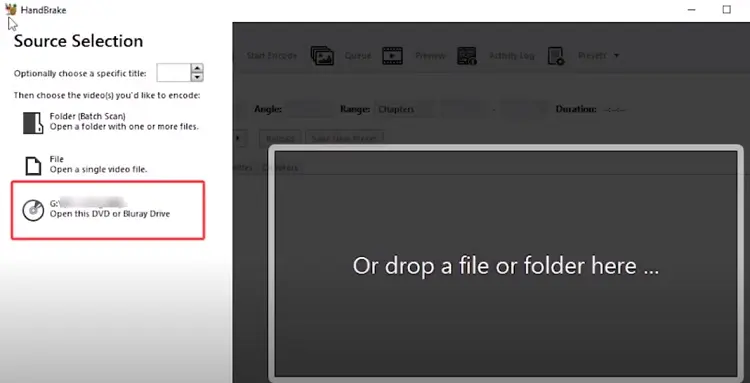
Step 4: Under Title, choose the correct title/chapter range. On a movie DVD, this is usually the longest title listed.
Step 5: Under Format, choose MP4 or MKV. Under Dimensions, match the source resolution, or pick a quick preset like “Fast 480p30” for a one-click setup.
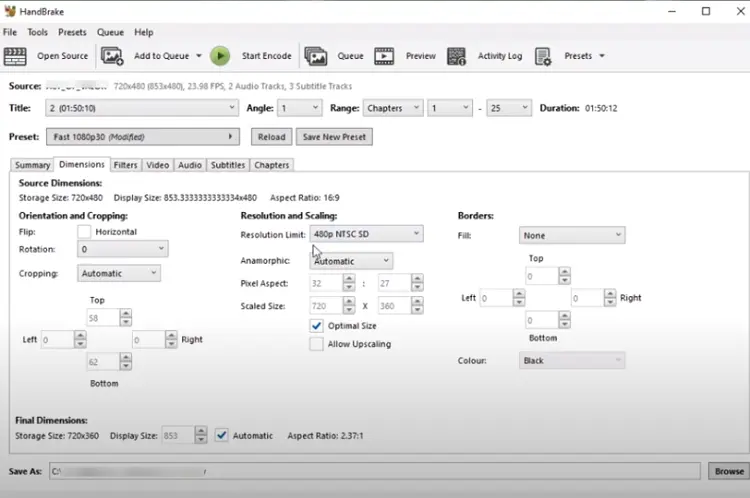
Step 6: Click Browse to choose your save location, then click Start Encode.
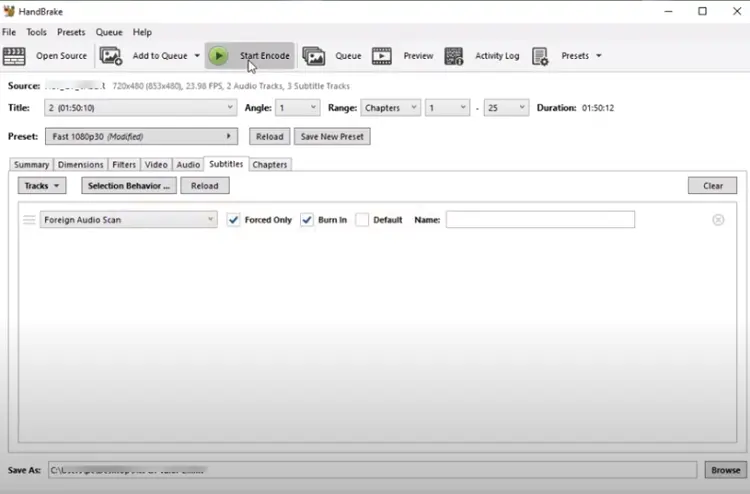
HandBrake cannot bypass advanced protections like Sony’s ARccOS or Disney’s 99-title tricks on its own. If it repeatedly grabs the wrong (very short) title or refuses to load the disc, move on to MakeMKV or a paid tool below.
Method 2: MakeMKV (Free – Best for Most Commercial DVDs)
MakeMKV is purpose-built for exactly this problem: it includes decryption for the most common commercial DVD protections and correctly identifies the real movie title even on discs using the 99-title trick.
Step 1: Download and install MakeMKV (free during its ongoing beta phase; a modest one-time fee applies for continued use after the trial, though the beta has historically been extended for years).
Step 2: Insert your DVD and open MakeMKV. It will scan the disc automatically.
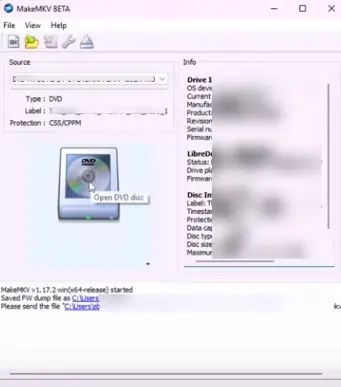
Step 3: Once scanning finishes, review the detected titles and uncheck anything you don’t want (extras, alternate audio you won’t use, etc.).
Step 4: Choose your output folder, then click the MKV icon/button to start the rip.
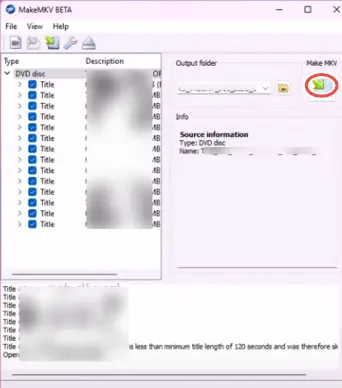
MakeMKV outputs MKV files only. It doesn’t compress or re-encode, so it copies the disc’s video and audio essentially as-is (which is actually why it tends to be one of the faster options, not slower, despite what some guides claim, since there’s no heavy re-encoding step).
If you specifically need MP4, run the resulting MKV through HandBrake afterward to convert the container format, or use a paid tool that outputs MP4 directly in one step.
Method 3: VLC Media Player (Free – Basic Discs Only)
VLC works fine for home-made or lightly protected discs, and is worth trying if you’d rather not install additional software.
Step 1: Insert your DVD and open VLC.
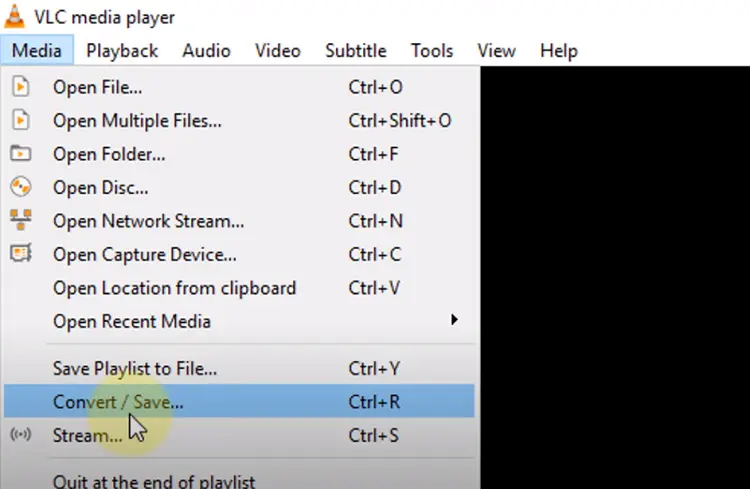
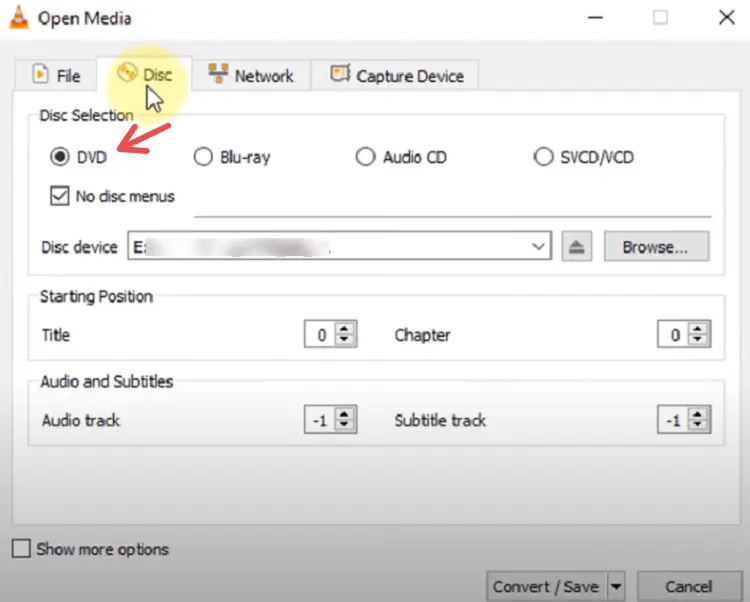
Step 2: Go to Media > Convert/Save, then click the Disc tab.
Step 3: Configure the DVD type, disc device, and desired titles/chapters, then click Convert/Save.
Step 4: Choose a profile such as Video – H.264 + MP3 (MP4).
Step 5: Set your destination file, then click Start.
VLC’s DVD ripping is genuinely a secondary feature bolted onto a media player, not a dedicated ripping tool. Expect it to work reliably on simple discs and struggle or fail outright on protected commercial ones.
Method 4: Paid Software for Stubborn or Heavily Protected Discs
If MakeMKV can’t crack a particular disc, which does happen with some newer or unusually protected releases, dedicated paid tools are built specifically to keep up with evolving protection schemes through frequent updates.
- WinX DVD Ripper: widely used for handling CSS, region codes, Sony ARccOS, and 99-title discs, with broad output format support and hardware-accelerated speed.
- DVDFab DVD Ripper: uses a frequently updated cloud decryption service to keep pace with newly released protection schemes, useful if you’re working through a large or recently purchased collection.
Both typically offer a free trial, so it’s worth trying the free options first (HandBrake, MakeMKV) and only reaching for paid software if you hit a disc they genuinely can’t handle.
Method 5: Disc-to-Digital Services (No Software Needed)
If you’d rather skip software entirely, disc-to-digital services scan your disc’s barcode and give you a digital copy through a streaming app, for a small per-disc fee.
Fandango at Home (formerly Vudu) is the best-known example in the US, letting you register eligible DVDs and Blu-rays for a few dollars each and stream them afterward without keeping the physical disc as a backup.
Coverage isn’t universal; some studios, home movies, and workout DVDs aren’t eligible. So check the service’s title-lookup tool before assuming a specific movie qualifies.
No DVD Drive? Here’s the Fix
Most laptops made since the mid-2010s dropped optical drives entirely, so this trips up a lot of people who otherwise have their software all set up.
- Get an external USB DVD drive. These connect via USB-A or USB-C, work automatically on Windows and Mac without extra driver installs, and are inexpensive. A portable external DVD drive like the Rioddas External CD/DVD Drive (view on Amazon) is the simplest fix if you’re converting more than a disc or two. Every method above works identically once it’s connected.
- Use a computer that still has a built-in drive, rip your DVDs there, and transfer the finished files to your main device via USB drive or cloud storage.
Choosing the Right Format and Quality Settings
MP4 is the safest, most broadly compatible choice. It plays on essentially every phone, smart TV, streaming device, and computer made in the last decade, and strikes a solid balance between file size and quality.
MKV is a good choice if you want to preserve multiple audio tracks, subtitle options, or chapter menus, or if you’re using MakeMKV’s uncompressed output as an intermediate step before further editing.
For compression, most modern tools default to H.264, which offers strong quality at a reasonable file size and wide device support.
Newer H.265/HEVC compresses further at similar quality, but isn’t supported on quite as many older devices, worth using only if your playback devices confirm HEVC support.
If storage space allows, matching your output resolution to the DVD’s native resolution (typically 720×480 or 720×576) avoids wasting space on upscaling that doesn’t add real detail. A DVD source will never look sharper than its original resolution, regardless of the output settings you choose.
Related: MP4 vs MKV: Which Video Format Should You Actually Use
Comparing Every Method
| Method | Cost | Best For | Limitations |
|---|---|---|---|
| HandBrake | Free | Home-made/unprotected DVDs, format conversion after MakeMKV | Needs libdvdcss for CSS protection; can’t handle advanced protections |
| MakeMKV | Free (beta) | Most commercial, copy-protected DVDs | MKV output only; no built-in compression |
| VLC | Free | Simple or unprotected discs, quick one-off rips | Weakest handling of copy protection among these options |
| WinX DVD Ripper / DVDFab | Paid (free trial) | Heavily protected, newer, or region-locked discs; large collections | License cost for full/ongoing use |
| Disc-to-digital service (Fandango at Home) | ~$2/disc | No software needed, convenience, occasional use | Limited title availability; doesn’t work for all discs |
Organizing and Backing Up Your Digital Library
- Use a clear folder structure: by genre, franchise, or release year. So your library stays navigable as it grows.
- Adopt consistent file naming, such as
Movie Title (Year).mp4, which also helps media server apps automatically pull in cover art and details. - Back up in two places. An external hard drive plus a cloud storage service protects against both hardware failure and accidental deletion. Especially important if you plan to eventually part with the physical discs.
- Keep original discs until you’ve verified playback. Watch each converted file through before considering the DVD itself expendable.
Common Mistakes to Avoid
- Assuming a “simple” free tool will handle every disc. Most commercial DVDs are copy-protected; picking a tool that matches your disc type from the start saves significant frustration.
- Not checking for the 99-title trick. If your rip comes out as a two-minute clip instead of the movie, your software grabbed a decoy title. MakeMKV or a paid ripper generally identifies the correct one automatically.
- Over-compressing to save space. A very low bitrate or aggressive resolution downscale can leave you with a noticeably worse copy than the DVD itself. There’s rarely a good reason to go below the source’s native quality.
- Skipping backups after conversion. Converting a disc and storing the result in only one place defeats much of the purpose of digitizing it in the first place.
- Forgetting to verify a rip before discarding the disc. Playback issues are much easier to fix while you can still re-rip from the original.
Troubleshooting Common Conversion Problems
The software won’t load the disc, or crashes on load. Try a different ripping tool better suited to protected discs (MakeMKV is a strong next step after VLC or HandBrake fail), and confirm the disc itself is clean and undamaged.
The output is a short, wrong clip instead of the full movie. This is the 99-title trick at work. MakeMKV and most paid rippers correctly detect the main movie title automatically; manually select the longest title if your tool lets you choose.
HandBrake won’t rip a commercial DVD at all. Confirm libdvdcss is properly installed. HandBrake needs it specifically for CSS-protected discs and won’t decrypt them without it.
Audio and video are out of sync in the output. Try re-ripping at the source’s native frame rate rather than a converted one, and check whether your software has a manual audio-delay adjustment if the issue persists.
The rip is very slow. This is often normal for encoding-heavy conversions (like HandBrake’s H.264 compression). MakeMKV is typically much faster since it doesn’t re-encode, so it’s worth trying as a faster alternative if you don’t specifically need MP4 output.
The disc keeps skipping, or the rip has glitches partway through. Clean the disc gently with a soft cloth from the center outward, then retry. Physical scratches are a common and fixable cause.
Final Thoughts
The gap between “simple DVD conversion tutorials” and what actually works on a real, store-bought movie collection almost always comes down to copy protection.
Once you match your tool to your disc type, HandBrake for home videos, MakeMKV for most commercial discs, and paid software for the stubborn holdouts. The rest of the process is genuinely straightforward.
Rip at a reasonable quality, back up your files in two places, and your DVD collection will outlast the discs it came from.
Related: How to Convert VCD to MP4: The Complete Guide
Frequently Asked Questions
What’s the best free way to convert a DVD to digital?
MakeMKV is generally the most reliable free option for commercial DVDs, since it includes built-in decryption for the most common protections. HandBrake is excellent for home-made or unprotected discs.
Is it legal to rip a DVD I own?
Personal backup of a DVD you legally own is broadly accepted in many regions, though laws around bypassing copy protection specifically vary by country. Check your local rules if you’re unsure.
Why won’t HandBrake rip my DVD?
Most commercial DVDs are copy-protected, and HandBrake needs an additional component called libdvdcss to handle standard CSS protection. It also can’t bypass more advanced protections on its own.
Why did my rip come out as a two-minute clip instead of the full movie?
Your disc likely uses the “99-title trick,” where fake short titles are mixed in to confuse basic rippers. MakeMKV or a dedicated paid ripper will usually detect the correct main title automatically.
What format should I convert my DVDs to?
MP4 for the widest device compatibility; MKV if you want to preserve multiple audio tracks, subtitles, or use it as an intermediate step before further editing.
Can I convert a DVD to digital without any software?
Yes. disc-to-digital services like Fandango at Home let you register eligible discs for a small per-disc fee and stream them afterward, no installation required.
My laptop doesn’t have a DVD drive. What do I do?
An external USB DVD drive solves this. It’s automatically recognized on Windows and Mac and works exactly like a built-in drive for every method in this guide.
Will converting my DVD reduce the video quality?
A DVD’s native resolution is already fairly low by modern standards (roughly 720×480), so as long as you don’t downscale further or over-compress, the digital copy will closely match what you’d see playing the original disc.
Is MakeMKV really free?
Yes, it’s free during its ongoing beta phase, which has historically continued for years; a modest one-time fee applies if you continue using it after a trial period expires.
What’s the difference between MP4 and MKV for DVD rips?
MP4 is more universally compatible across devices and apps; MKV supports more embedded tracks (multiple audio/subtitle options) but has slightly less universal playback support.
Can VLC rip copy-protected DVDs?
Only DVDs with basic CSS protection, and even then, inconsistently. VLC wasn’t built as a dedicated ripping tool, so MakeMKV or a paid ripper is more reliable for commercial discs.
How long does it take to convert a DVD to digital?
MakeMKV (no re-encoding) is typically fastest, often under 20–30 minutes for a full movie. HandBrake’s re-encoding process can take significantly longer depending on your computer’s processing power and chosen quality settings.
Do I need an internet connection to rip a DVD?
No, the core ripping and conversion process works offline. Some paid tools with cloud-based decryption services may need a connection specifically to fetch updated protection-bypass data for very new discs.
Can I convert a whole TV series box set, episode by episode?
Yes. Most ripping software lets you select and export individual titles/chapters separately, so you can save each episode as its own digital file rather than one combined video.
What do I do if a paid tool also can’t rip my disc?
This is rare but can happen with brand-new, unusually protected releases. Checking the software’s official update log or support forum for that specific disc/protection type is the best next step, since these tools update frequently to catch up with new schemes.
Can I convert Blu-ray discs the same way?
Some of these tools (MakeMKV, DVDFab) also support Blu-ray, though Blu-ray uses different, generally stronger protection (AACS, BD+), so results and required software can differ from standard DVDs.
Please share this article with your friends and relatives if you find it useful.
We also ask that you bookmark this page for future reference, as we are constantly updating our articles with new information.
Sign up for our free newsletter as well to receive fresh information immediately in your inbox and keep technically up to date.
Disclosure: If you follow our links to a retailer’s website and make a purchase, we will get an affiliate commission on some, but not all, of the items or services we promote. This will cause no price change for you.