“Your Location Is Currently in Use” on Windows: What It Means
Quick answer: This message means a legitimate app on your PC ( Weather, Maps, Find My Device, a browser, or similar) just accessed Windows’ built-in location service, which it’s only allowed to do because you (or Windows’ default settings) previously permitted it.
It’s not spyware, hacking, or a sign of a compromised system. Hover over the icon to see which app triggered it, or go to Settings > Privacy & security > Location to review and adjust exactly which apps can use your location.
If you’re on Windows 11, note that the settings path differs from Windows 10. This guide covers both, since a fair number of older guides still show outdated Windows 10-only screens that don’t quite match what you’ll see today.
What Does “Your Location Is Currently in Use” Mean?
When you see this icon in your notification area, an app on your PC has just requested and received your location through Windows’ built-in location service. Hovering over the icon typically shows which app triggered it.
Windows uses the Location Service to determine where your device is. Depending on your hardware, it can use GPS, nearby Wi-Fi networks, network signals, and your IP address to estimate your location.
Apps with permission can access this information to provide location-based features. That’s how Windows helps you find nearby stores, display local weather, and provide accurate turn-by-turn navigation.
This is not a sign of intrusion or malware. It’s a legitimate Windows feature working as designed. The notification exists specifically so you’re aware when it happens, not because something has gone wrong.
What Is Your Location Actually Being Used For?
The most common, expected uses are apps where location genuinely improves the experience:
- Weather apps, to show local forecasts without you typing a city
- Maps and navigation, for obvious reasons
- Find My Device, Windows’ built-in feature for locating a lost or stolen PC
- Browsers (Edge, Chrome, Firefox), when a website you’re visiting requests your location, often for store locators, local search results, or region-specific content
Less obviously, some apps use location for purposes that aren’t always clearly explained: social media apps for location-tagged content or local ads, shopping apps for nearby store information, and various background services for regional content delivery.
If you’re unsure why a specific app wants your location, checking that app’s own privacy settings or support page is usually more informative than guessing.
How to Control Location Access on Windows
The settings path differs between Windows 10 and Windows 11. This is worth knowing before you go looking, since screenshots in older guides won’t match what you see today.
| Windows 10 | Windows 11 | |
|---|---|---|
| Main location settings | Settings > Privacy > Location | Settings > Privacy & security > Location |
| Taskbar icon toggle | Settings > Personalization > Taskbar > Turn system icons on or off | Settings > Personalization > Taskbar > Other system tray icons |
1. Turn Off Location Access Entirely
If you’d rather no app use your location at all:
- Go to Settings > Privacy & security > Location (Windows 11) or Settings > Privacy > Location (Windows 10).
- Toggle Location services off.
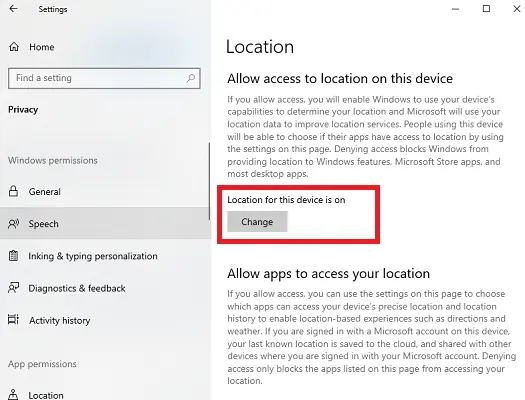
This is the broadest option. It blocks Windows’ location service system-wide for every app that relies on it.
2. Control Access Per App
If you want some apps to keep using your location while blocking others, this is the better option than an all-or-nothing switch:
- Go to the same Location settings page.
- Scroll to Let apps access your location (or the equivalent per-app list).
- Toggle individual apps on or off based on what you’re comfortable with.
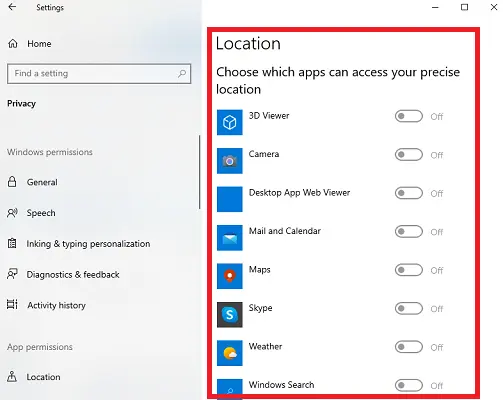
You can also set a default location here, which apps fall back to when Windows can’t determine your precise position. This is useful for desktops without GPS hardware that still want approximate location-based features to work.
3. Handle Browser-Level Location Permissions Separately
This is a common source of confusion the original version of this guide didn’t cover: browsers manage site-level location permissions independently of the Windows setting above.
If a specific website keeps triggering the location icon, the fix often isn’t in Windows’ Privacy settings at all. It’s in your browser.
In Edge, for example: Settings > Privacy, search, and services > Site permissions > Location, where you can review and remove sites you’ve previously allowed to access your location.
4. Use the Registry Method (Advanced Users Only)
This disables the location service more forcefully, bypassing the Settings toggle entirely. Back up your registry before making any changes. Editing it incorrectly can cause system issues unrelated to what you’re trying to fix.
- Press Windows key + R, type
regedit, and press Enter. - Navigate to:
HKEY_LOCAL_MACHINE\SYSTEM\CurrentControlSet\Services\lfsvc\Service\Configuration - Double-click the Status key and change its value to 0.
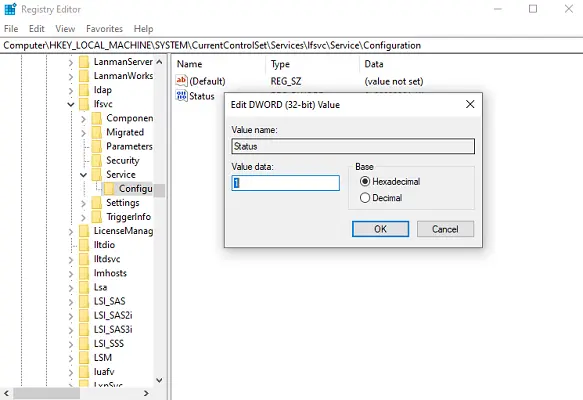
This is a heavier-handed option than the Settings toggle in Method 1, and mainly useful in specific troubleshooting or managed-device scenarios rather than everyday use.
5. Hide the Notification Icon Without Disabling Location
If you don’t mind apps using your location but want the icon itself gone from your taskbar:
Windows 11: Go to Settings > Personalization > Taskbar, expand Other system tray icons, and turn off the location notification toggle.
Windows 10: Go to Settings > Personalization > Taskbar > Select which icons appear on the taskbar, and turn off Location Notification.
Related: Easy Fixes for Windows 10 Action Center Not Opening Problem
An Important Correction: Clearing “Location History” No Longer Applies
Older guides to this topic mention a “Clear location history” button in Windows’ location settings. This feature was removed from Windows in March 2025.
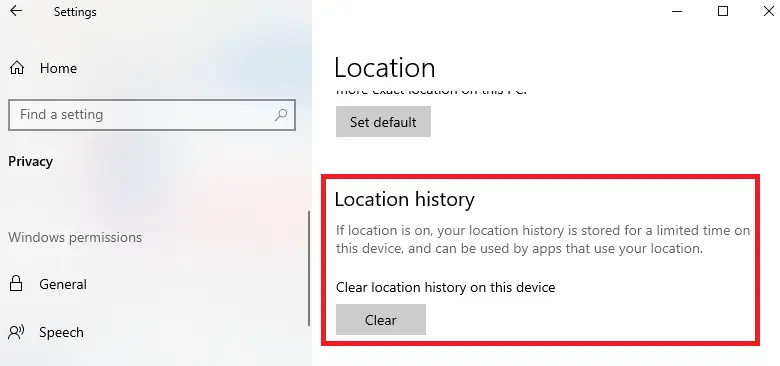
Microsoft has moved related functionality toward cloud-linked activity tied to your Microsoft account rather than a local, clearable history stored on the device. So if you’re looking for that button today, it’s expected that you won’t find it; it isn’t a sign anything is broken.
What’s Coming: Windows Privacy Dashboard
Reporting on an upcoming 2026 Windows update points to a more centralized Windows Privacy Dashboard, accessible from Settings > Privacy & security, intended to bring location, microphone, camera, and other sensor permissions into one consolidated view.
This hasn’t fully rolled out at the time of writing, so treat it as a heads-up rather than a current how-to. But it’s worth knowing the location settings layout may shift again as this rolls out more broadly.
Common Mistakes to Avoid
- Assuming the icon means something is wrong. It’s a transparency notification, not a warning. Windows is telling you a permitted app used a permission it already had.
- Only checking Windows Settings when a browser site is the actual trigger. If the notification keeps appearing and you can’t pin it to a specific app, check your browser’s own site permissions too.
- Editing the registry as a first step. The Settings-based toggle (Method 1 or 2) accomplishes the same result for nearly everyone, with far less risk than a registry edit.
- Looking for a “clear location history” button that no longer exists. This was removed in March 2025. Don’t assume something’s broken if you can’t find it.
- Disabling location entirely when only one specific app is the actual annoyance. Per-app control (Method 2) is usually the better fit than an all-or-nothing switch.
Related: How to Resolve the DISM Error 1910 in Windows 10?
Final Thoughts
Seeing the “Your location is currently in use” message on your Windows PC doesn’t automatically mean something is wrong. In most cases, it’s simply Windows letting you know that an app you allowed to access your location is using that permission. It’s a built-in privacy feature designed to keep you informed.
If the notification appears more often than you’d like, review your location settings and app permissions. You can turn off location access completely or allow it only for the apps you trust. That way, you stay in control of your privacy without giving up features you actually use.
Frequently Asked Questions
What does “your location is currently in use” mean on Windows?
It means an app with permission has just accessed your device’s location through Windows’ built-in location service. Hover over the notification icon to see which app triggered it.
Is “your location is currently in use” a sign of hacking or malware?
No. It’s a normal, expected notification for a legitimate Windows feature working as designed. It appears specifically to keep you informed, not because anything is wrong.
Why does this notification keep appearing repeatedly?
Usually because an app (like Weather, Maps, or a browser tab) is checking your location periodically as part of its normal function. Check Settings > Privacy & security > Location to see which app is responsible, and adjust its permission if you’d rather it not have access.
How do I turn off location tracking on Windows 11?
Go to Settings > Privacy & security > Location and toggle Location services off to disable it system-wide, or scroll down to control access for individual apps instead.
Does turning off location services stop all location tracking?
It stops apps from accessing your precise location through Windows’ location service. Some apps may still estimate your approximate location through other means, like your IP address, independent of this setting.
Where did the “clear location history” option go?
Microsoft removed the on-device location history feature in March 2025, shifting related functionality toward cloud-linked account activity rather than a locally clearable history. If you can’t find this button anymore, that’s expected. It’s not a bug.
Can websites access my location even if I’ve disabled it in Windows settings?
Browser-level site permissions are managed separately from Windows’ system settings. Check your browser’s own privacy/site permissions page (in Edge: Settings > Privacy, search, and services > Site permissions > Location) if a specific website keeps requesting your location.
Is it safe to leave location services on?
Generally yes, for apps you trust and that have a legitimate reason to use it (navigation, weather, Find My Device). The per-app permission list lets you selectively allow only the apps you’re comfortable granting access to.
How do I hide the location icon without disabling location entirely?
In Windows 11, go to Settings > Personalization > Taskbar > Other system tray icons and turn off the location notification. In Windows 10, the equivalent is under Settings > Personalization > Taskbar > Select which icons appear on the taskbar.
Does disabling location in Windows settings affect apps downloaded outside the Microsoft Store?
It can, but not always completely. Apps that don’t rely on the Windows location service (using alternative methods like Wi-Fi or Bluetooth-based geolocation instead) may not be fully covered by this setting. Reviewing an unfamiliar app’s own privacy settings is worth doing if this is a concern.
We hope this guide helped you understand what the message means and how to manage your location settings with confidence. If you found it useful, please share it with your friends and family.
Also, follow The Infobits on Facebook and X (formerly Twitter) for more Windows tips, privacy guides, troubleshooting tutorials, and practical tech advice.
We also ask that you bookmark this page for future reference, as we constantly add new information to our articles.
Sign up for our free newsletter as well to receive fresh information immediately in your inbox and keep technically up to date.
Disclosure: If you follow our links to a retailer’s website and make a purchase, we will get an affiliate commission on some, but not all, of the items or services we promote. This will cause no price change for you.