
SIM Not Provisioned MM2: What It Means & 9 Real Fixes
Quick answer: “SIM not provisioned mm2” means your carrier hasn’t activated or registered your SIM (or eSIM) on their network yet. Your phone can see the SIM, but the network won’t let it make calls or use data beyond emergency numbers. Start by toggling Airplane Mode on and off, restarting your phone, and reseating the SIM card. If that doesn’t work, check for a carrier settings update, then contact your carrier. In most cases, only they can push the final activation through.
Seeing “SIM not provisioned” or “SIM not provisioned mm#2” pop up on your screen is alarming, especially when it leaves you with nothing but the emergency call option.
The good news is that this is one of the most common phone errors out there. It isn’t a sign your phone is broken, and it’s usually fixable in a few minutes, either by you or with one quick call to your carrier.
Below is exactly what the error means, why it happens, and a full list of fixes ordered from fastest to most involved, so you can work through them without wasting time on steps that won’t apply to your situation.
What Does “SIM Not Provisioned” Actually Mean?
“Provisioned” is carrier language for “activated and linked to your account.” When your phone says a SIM is “not provisioned,” it means the physical SIM (or eSIM profile) is physically present and readable, but your carrier’s network hasn’t approved it to carry calls, texts, or data on your line yet.
With this error active, your phone will typically still let you dial emergency services, but nothing else; no regular calls, no texts, no mobile data. Wi-Fi calling and Wi-Fi internet access are usually unaffected, since those don’t rely on the cellular network at all.
On dual-SIM phones, the message will specify which line is affected. For example, “SIM 1 not provisioned” or “SIM 2 not provisioned”, which helps narrow down whether the problem is with a specific card, slot, or eSIM profile.
Related: What Does “No SIM Restrictions” Mean? Full 2026 Unlock Guide
What’s the Difference Between “SIM Not Provisioned” and “SIM Not Provisioned for Voice”?
These sound similar but point to slightly different problems:
- “SIM not provisioned” (general) usually means the whole line is inactive; no calls, texts, or data.
- “SIM not provisioned for voice” specifically means your data and texts may still work, but outgoing/incoming calls are blocked. This is a half-activated line rather than a fully inactive one, and it’s especially common on Google Fi and other MVNO (mobile virtual network operator) plans that provision voice and data separately.
If you’re only missing calls while data still works, skip straight to the carrier settings update and carrier contact steps below. The fix is almost always on the carrier’s side, not something reseating the SIM will resolve.
Why This Error Happens
There are a handful of common triggers, roughly in order of how often they occur:
- A brand-new SIM card that hasn’t finished activating. This is by far the most common cause. Most SIM and eSIM activations complete within a few hours, though carriers can take up to 24–48 hours in some cases.
- You just switched phones and moved your SIM over, and the carrier’s system hasn’t re-registered the SIM against the new device’s IMEI yet.
- The SIM card has physically shifted, is dirty, or is damaged, so the phone can’t read it reliably.
- Your account has an issue – a lapsed prepaid balance, a suspended line, or a billing hold. That causes the carrier to block provisioning.
- A carrier-side outage or server issue, which is out of your control and resolves once their systems are back up.
- Rarely, the phone itself has a hardware fault with the SIM slot or a locked SIM from a previous carrier that hasn’t been unlocked.
This error is usually not caused by your APN (Access Point Name) settings. That’s a separate configuration issue that affects data specifically once a line is already provisioned. It’s a common troubleshooting rabbit hole people go down that rarely fixes this particular error.
Related: What Does Locked SIM Mean? What to Do If SIM Locked?
9 Fixes for “SIM Not Provisioned MM2” (Fastest First)
Work through these roughly in order. The first few take seconds and solve the majority of cases.
1. Toggle Airplane Mode On and Off
This is the fastest fix and solves a surprising number of cases, because it forces your phone to drop its current cellular connection and negotiate a brand-new one with the tower.
- Android: Swipe down from the top of the screen (twice, on most phones) to open Quick Settings, tap the Airplane Mode icon, wait about 30 seconds, then tap it again to turn it off.
- iPhone: Open Control Center (swipe down from the top-right corner) or go to Settings, tap the Airplane Mode icon, wait 30 seconds, then tap it again.
Give your phone a minute afterward to reconnect and re-register with the network.
2. Restart Your Phone
A full power-off (not just a quick restart) forces the modem to fully drop its session and re-attach to the network from scratch, which clears a lot of temporary provisioning glitches.
Hold the power button, select shut down (or power off + volume up, depending on your model), wait about 30 seconds, then turn it back on.
3. Reseat the SIM Card
If your phone uses a physical SIM, a card that’s sitting even slightly off its contacts can trigger this error.
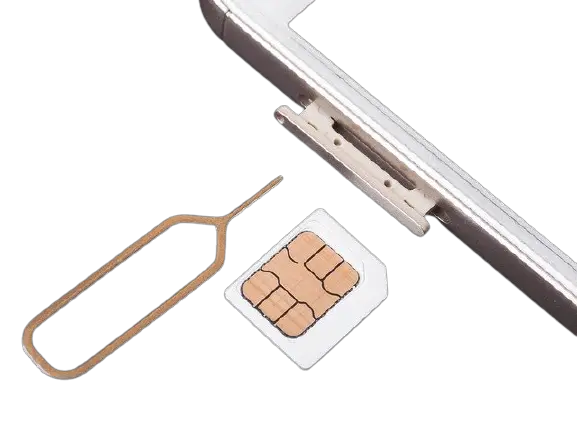
- Power off your phone completely.
- Use a SIM ejector tool (or an unfolded paperclip) to open the tray.
- Remove the SIM and check for dust, dirt, or visible scratches/cracks.
- Wipe the gold contacts gently with a dry, lint-free cloth.
- Reinsert it, making sure it’s seated flat and fully in the tray.
- Slide the tray back in, power the phone on, and give it a minute to reconnect.
Using an eSIM instead? Skip this step entirely, and do not delete or remove the eSIM profile just because it shows this error. The activation QR code or profile link your carrier gave you is often single-use, and removing it may leave you without a way to reinstall the line yourself.
If your SIM tray is stubborn or you don’t have the tool that came with your phone, a Universal SIM Ejector Tool is a couple of dollars on Amazon and works across virtually every phone model.
For cleaning the SIM contacts properly without leaving lint or scratches, a lint-free microfiber electronic cleaning cloth available on Amazon is worth keeping in a drawer for this and other small electronics cleanup.
4. Check for a Carrier Settings Update
Carriers periodically push small updates, separate from full OS updates. That helps your phone communicate properly with their network.
This step is easy to overlook, but it resolves connectivity issues surprisingly often.
- iPhone: Go to Settings > General > About. If an update is available, a prompt will appear automatically. Follow the on-screen instructions to install it.
- Android: Go to Settings > Network & Internet > Mobile Network, tap on your carrier, and select Update if one is available. (Exact menu wording varies by manufacturer.)
5. Update the Carrier Services App (Android Only)
Carrier Services is a background Google app, separate from your phone’s core software, that helps manage things like Wi-Fi calling and network registration on many Android phones.
An outdated version can occasionally cause provisioning errors. Open the Google Play Store, search for “Carrier Services,” and install any available update.
Related: Mobile Network State Disconnected: 12 Fixes That Actually Work
6. Confirm Your SIM Is Actually Activated
If you recently bought a new SIM or ported your number, this is the most likely explanation. Most activations complete within a few hours, but can take up to 24–48 hours depending on the carrier.
Double-check the activation confirmation email or text from your carrier, or log into your carrier account online/via their app to check your line’s status before assuming something is broken.
7. Reset Network Settings
This is a heavier step, so save it for after the quicker fixes above. It clears saved Wi-Fi passwords, Bluetooth pairings, VPN configurations, and any custom APN settings.
So you’ll need to reconnect to Wi-Fi networks afterward.
- Android: Settings > System (or General Management) > Reset Options > Reset Network Settings. Exact wording varies by manufacturer.
- iPhone: Settings > General > Transfer or Reset iPhone > Reset > Reset Network Settings.
8. Test the SIM in a Different Phone (or Test a Different SIM in Yours)
This step isolates whether the problem is your phone, your SIM slot, or your SIM card itself.
- Insert your SIM into a different, unlocked phone. If the error follows the SIM, the card itself (or your carrier account) is the likely cause.
- Alternatively, insert a SIM you know works into your phone. If that one also throws the error, the problem is more likely your phone’s hardware or software rather than the original SIM.
If the phone you’re testing with uses a different SIM size, a cheap SIM Card Adapter Kit lets a nano-SIM fit a micro or standard slot without needing to cut anything.
9. Contact Your Carrier (or Request a New SIM)
If you’ve worked through the steps above and the error persists, the remaining cause is almost always on the carrier’s side. It may be a stuck provisioning request, an account hold, or a genuinely faulty SIM that needs replacing.
Only your carrier can push a manual re-activation or issue a replacement SIM, so this call is often the fastest actual fix once the basic troubleshooting is exhausted.
When you call, mention specifically that you’re seeing “SIM not provisioned mm2” (or “for voice,” if that’s your exact message). This tells their support team you’ve likely already ruled out the basics, which usually gets you routed to activation/provisioning support faster.
Related: Fix “android.process.acore has stopped” Error (Latest)
Symptom, Likely Cause, and What to Do
| What You’re Seeing | Most Likely Cause | Try This First |
|---|---|---|
| Error appears right after inserting a new SIM | SIM not yet activated | Wait a few hours, check activation status with carrier |
| Error appears after switching phones | SIM not re-registered to new IMEI | Toggle Airplane Mode, restart phone |
| Calls fail, but data/texts work fine | Voice-specific provisioning gap | Carrier settings update, then contact carrier |
| Error follows the SIM to another phone | Faulty or deactivated SIM card | Request a replacement SIM from your carrier |
| Error stays even with a different, known-good SIM | Phone’s SIM slot or software issue | Reset network settings; consider a repair check |
| Happens after a long trip or being out of coverage | Line temporarily suspended for inactivity | Contact carrier to reactivate the line |
Myth vs. Fact
Myth: This means your SIM card is broken. Fact: A dead or damaged SIM is only one of several possible causes, and usually not the most common one. The vast majority of cases are simple activation delays or a connection glitch that airplane mode or a restart clears.
Myth: Changing your APN settings will fix it. Fact: APN settings control mobile data routing on an already-active line. If your SIM isn’t provisioned at all, editing the APN won’t do anything; the line needs to be activated first.
Myth: You need to factory reset your phone to fix this. Fact: A factory reset is a drastic step that erases your phone and never addresses a provisioning issue in most cases, since the problem lives on the carrier’s network side, not in your phone’s stored data.
Reset Network Settings (a much lighter step) is usually as far as you need to go.
Myth: If it’s not fixed instantly, your phone is defective. Fact: Provisioning is a server-side process on the carrier’s end. Even with a perfectly healthy phone and SIM, activation can take anywhere from a few minutes to 24-48 hours depending on the carrier.
Quick Troubleshooting Checklist
- [1] Toggled Airplane Mode on and off
- [2] Fully restarted (powered off and back on) the phone
- [3] Reseated the SIM card and checked it for visible damage (skip if using eSIM)
- [4] Checked for and installed a carrier settings update
- [5] Updated the Carrier Services app (Android)
- [6] Confirmed SIM/eSIM activation status with the carrier
- [7] Tested the SIM in another phone, or a known-good SIM in this phone
- [8] Contacted the carrier if all else failed
When to Just Call Your Carrier Right Away
Skip the troubleshooting steps and go straight to your carrier if:
- You’re on a prepaid plan and your balance recently lapsed
- You just ported your number from another carrier
- The error appeared after a known network outage in your area
- You’re using an eSIM and haven’t installed the profile yet
- You’ve been outside your carrier’s coverage area for an extended period
In each of these cases, the fix genuinely lives on your carrier’s side, and no amount of restarting or reseating will resolve it.
If a technician confirms your SIM slot itself is damaged and a repair isn’t cost-effective, browsing affordable unlocked smartphones on Amazon is a reasonable next step depending on your budget. In the meantime, keeping a portable mobile hotspot on hand gives you a reliable connectivity backup.
Frequently Asked Questions
What causes the “SIM not provisioned mm2” error?
It happens when your carrier hasn’t activated or registered your SIM (or eSIM) on their network. Common triggers include a newly purchased SIM that hasn’t finished activating, moving a SIM to a new phone, a suspended account, or a carrier server issue.
How long does SIM activation usually take?
Most SIM and eSIM activations complete within a few hours, though some carriers can take up to 24-48 hours, especially for number ports or new accounts.
Can I fix “SIM not provisioned” myself, or do I always need to call my carrier?
Many cases resolve with simple steps like toggling Airplane Mode, restarting your phone, or reseating the SIM. If those don’t work, the remaining fix is usually something only your carrier can do on their end.
Does “SIM not provisioned” mean my SIM card is broken?
Not necessarily. A faulty SIM is only one possible cause among several, and it’s usually not the most likely one; activation delays and connection glitches are far more common.
Why can I still make emergency calls but nothing else?
Emergency calling (911 or your local equivalent) doesn’t require an activated SIM on most networks. Phones are designed to route emergency calls through any available carrier signal, regardless of your line’s provisioning status.
What’s the difference between “SIM not provisioned” and “SIM not provisioned for voice”?
“Not provisioned” generally means the whole line is inactive. “Not provisioned for voice” means data and texts may still work, but calls specifically are blocked. A sign of a half-completed activation, common on Google Fi and similar plans.
Will resetting my network settings fix this error?
It can, especially if a corrupted network configuration is involved, but it’s a heavier step that also clears saved Wi-Fi passwords and custom settings. Try lighter fixes like toggling Airplane Mode and restarting first.
Can changing my APN settings fix “SIM not provisioned”?
No. APN settings affect mobile data on an already-active line. If the SIM itself isn’t provisioned, APN changes won’t resolve the error since there’s no active line yet for the APN to route data through.
Does this error happen on both iPhone and Android?
Yes. The underlying cause is the same regardless of device ( it’s a carrier-network issue ), though the exact menu paths for things like carrier settings updates differ slightly between iOS and Android.
Why did this happen after I switched to a new phone?
When you move a SIM to a new device, the carrier needs to re-register that SIM against the new phone’s IMEI number. This usually happens automatically, but occasionally needs a manual nudge from customer support.
Is it safe to remove and reinsert an eSIM if I see this error?
No; avoid deleting an eSIM profile in response to this error. The original activation QR code or link is often single-use, and removing the profile can leave you unable to reinstall the line without contacting your carrier again.
Can a dirty or damaged SIM slot cause this error?
Yes, though it’s less common than an activation delay. Dust, debris, or a bent contact pin inside the SIM slot can prevent your phone from reliably reading the card.
Why does this happen more often with Google Fi?
Google Fi and other MVNOs (mobile virtual network operators) sometimes provision voice and data separately on the back end, which makes the “not provisioned for voice” variant of this error more common on their network than on major carriers.
Should I request a replacement SIM if nothing else works?
Yes; if you’ve worked through reseating, restarting, and confirming activation status without success, and testing the SIM in another phone shows the same error, a replacement SIM from your carrier is the appropriate next step.
Can a suspended or unpaid account cause this error?
Yes. If your account has a billing hold, a lapsed prepaid balance, or a suspension, the carrier will block provisioning until the account issue is resolved, even though the SIM itself is physically fine.
Does a factory reset fix “SIM not provisioned”?
Rarely. Since the issue is almost always on the carrier’s network side rather than in your phone’s software, a factory reset is a drastic step that’s unlikely to help and isn’t recommended as a troubleshooting step for this error.
What should I say when I call my carrier about this error?
Mention the exact error message, including “mm2” or “for voice” if it’s shown, and note which troubleshooting steps you’ve already tried. This helps their support team route you directly to activation or provisioning support rather than general troubleshooting.
Can I use my phone at all while it shows “SIM not provisioned”?
Yes, aside from cellular calls, texts, and data. Wi-Fi, Wi-Fi calling, apps, and everything else not dependent on the cellular network continue to work normally.
What if my SIM slot turns out to be physically broken?
If your carrier doesn’t support eSIM and your physical SIM slot is confirmed faulty by a technician, your options are a phone repair, an affordable replacement device, or keeping a mobile hotspot on hand for connectivity in the meantime.
We hope you found this article useful, and please like and follow us on Facebook and Twitter to receive regular updates.
Furthermore, we ask that you bookmark this page for future reference.
Sign up for our free newsletter as well to receive new information directly in your inbox and stay technically informed.
Disclosure: If you follow our links to a retailer’s website and make a purchase, we will get an affiliate commission on some, but not all, of the items or services we promote. This will cause no price change for you.
You May Be Interested in Reading:
- How to Fix the ‘Mobile Network State Disconnected’ Error?
- How to Fix the ‘android.process.acore has stopped’ Android Error?
- 10 Steps To Take If The Flashlight Isn’t Working On an Android Phone
- How to Charge Your Phone Without a Charger?
- Advantages of a Firewall and 4 Best Android Firewall Apps For Easy Use